The Unbreakable Spirit of Danny Lim
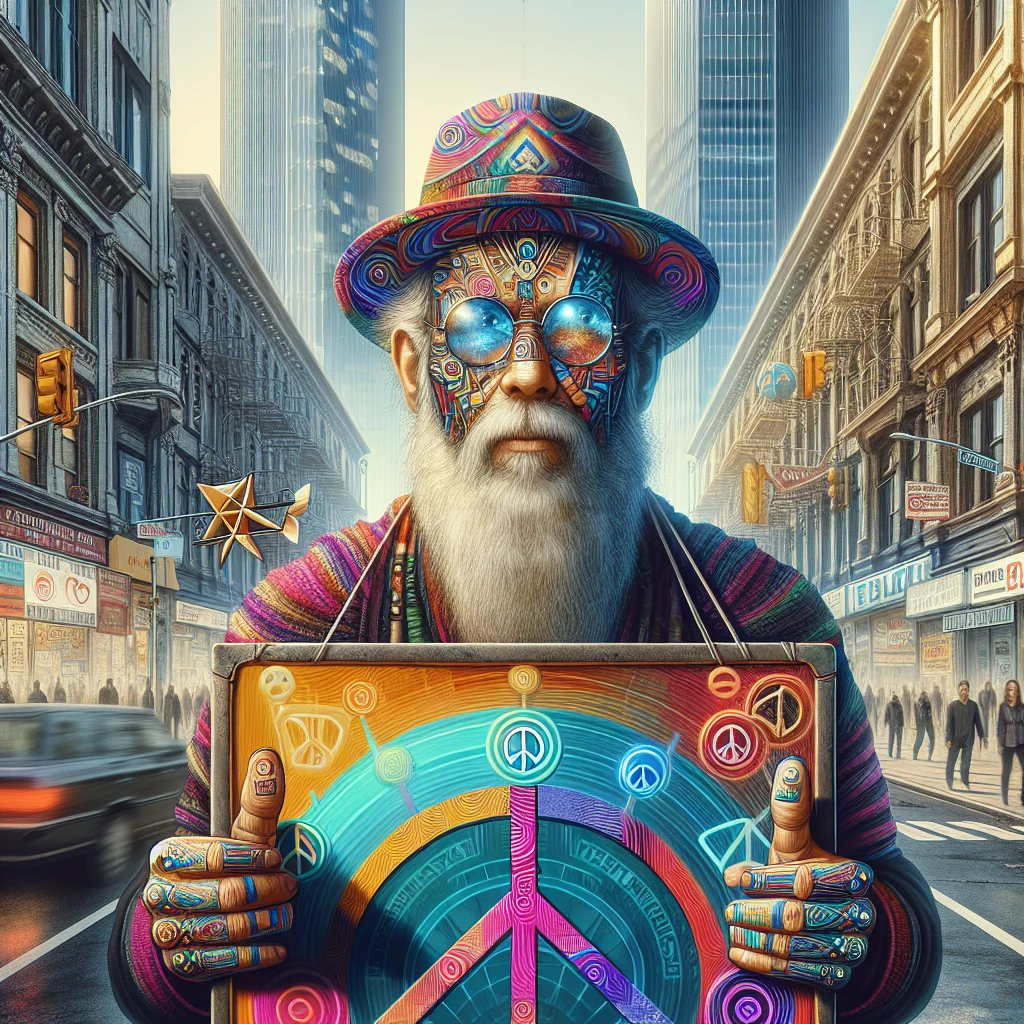
Have you ever wandered through the bustling heart of Sydney’s CBD, stressed about your daily commute, only to suddenly find yourself grinning at a cheerful elder statesman wearing a remarkably cheeky sandwich board? That is the undeniable magic of Danny Lim. As soon as you spot him, usually flashing a peace sign and beaming a smile that lights up the entire block, you know you are witnessing a living legend of Australian civic life. What is it about a simple man with a hand-painted sign that captures the imagination of an entire nation?
You see, he is not just a guy on the street; he represents a profound form of democratic expression that cuts through the noise of corporate politics. I remember grabbing a quick coffee near Town Hall a few years back, rushing between intense meetings and feeling the absolute crush of the daily grind. Out of nowhere, there he was. His board displayed an incredibly witty, slightly subversive pun about the sitting prime minister. Suddenly, the entire street softened. Office workers laughed out loud, tourists stopped to take selfies, and for a brief moment, everyone remembered that civic engagement does not have to be a miserable, bureaucratic affair. It can be joyous, funny, and deeply human.
Advocacy usually feels heavy, burdened by endless petitions and angry shouting matches. Danny completely flips that script. He uses genuine warmth and sharp satire to force us to look up from our screens and connect with the physical community around us. If you want to understand how grassroots communication actually changes the atmosphere of a city, you have to look closely at his methods.
The Core Phenomenon: Humor as a Political Weapon
What exactly makes this specific brand of street-level advocacy so incredibly compelling? It boils down to a brilliant mixture of radical vulnerability and razor-sharp satire. When someone stands completely exposed on a public corner, armed with nothing but painted cardboard and a smile, they immediately disarm the usual defenses we put up against political messaging. You cannot argue with a pun; you either laugh at it or you groan, but either way, the message slips past your ideological barriers.
Let us break down exactly how this approach stacks up against other forms of modern communication.
| Advocacy Methodology | Emotional Impact on Public | Civic Value Proposition |
|---|---|---|
| The Sandwich Board Method | Immediate amusement, disarming warmth, high local engagement. | Brings physical visibility to issues, creates shared community moments. |
| Social Media Arguments | High stress, polarization, echo chambers. | Rapid dissemination of information, but low retention of nuance. |
| Formal Organized Protests | Solidarity, occasional intimidation for outsiders. | Mass demonstration of numbers, often ignored by passing traffic. |
There is a massive value proposition in taking politics back to the pavement. First, it provides an instantaneous mental health boost to everyday commuters; seeing someone so gleefully defiant reminds people not to take authority too seriously. Second, it brilliantly demystifies political untouchability. By turning powerful politicians into the punchline of a clever, albeit sometimes crude, joke, the power dynamic shifts back to the everyday citizen.
To truly grasp his philosophy, you have to recognize these three core tenets:
- Humor as an Impenetrable Shield: A joke is much harder for authorities to prosecute than an angry threat. Satire forces the legal system to debate the mechanics of comedy, which almost always makes the system look ridiculous.
- Unwavering Consistency: Showing up once is a stunt. Showing up every single week, for years on end, transforms a person into a cultural institution. People trust consistency.
- Absolute Peacefulness: You will never see him screaming at passersby or acting aggressively. The power lies in the contrast between the provocative words on the board and the gentle demeanor of the man wearing it.
The Early Origins
To fully appreciate the man behind the board, we need to trace the journey back to its roots. Born in Malaysia, he eventually made his way to Australia, bringing with him an incredibly strong work ethic and a deep appreciation for the democratic freedoms that many locals take for granted. Before he became the iconic figure we recognize on the streets today, he led a very different life, actively participating in the very political systems he now satirizes.
His early days in Australia involved standard civic duties and a strong desire to contribute to his local community. He understood early on that if you want to see change, you have to participate directly. This foundational period laid the groundwork for his deep understanding of how local government operates, how politicians think, and more importantly, how bureaucratic systems often fail the everyday person.
The Evolution of a Local Leader
The transition from a regular citizen to an elected official is a crucial chapter in his story. Many people do not realize that he actually served as a local councilor in the Municipality of Strathfield. During his time in office, he was known for being an outspoken advocate for transparency, environmental preservation, and anti-corruption measures. He sat in the boring meetings, read the zoning reports, and fought the good fight from inside the chambers.
However, the limitations of formal politics eventually became apparent. The red tape, the compromises, and the slow pace of change can frustrate anyone who genuinely wants to improve society. His evolution from a suit-wearing councilor to a grassroots street activist was born out of a realization that you can often reach more people and make a bigger impact by talking to them directly on their morning commute than by shouting into a microphone at a poorly attended council meeting.
The Modern State of Street Activism
As we navigate the highly digitized landscape of 2026, the contrast between online slacktivism and genuine physical presence has never been starker. We are constantly bombarded by algorithmic outrage, yet nothing cuts through the digital noise quite like a human being standing in the rain with a funny sign. The modern state of his activism has transcended mere political protest; it has become a form of beloved performance art.
Today, the sandwich board is recognized instantly. It is a canvas for commenting on current events, environmental crises, and whatever political scandal is currently dominating the news cycle. The format remains the same, but the messages constantly adapt, proving that traditional, low-tech communication still holds immense power even in an era dominated by artificial intelligence and hyper-fast media cycles.
The Jurisprudence of Public Expression
When you stand on a street corner wearing a sign that uses clever typography to spell out potentially offensive words—most famously replacing the letter ‘U’ with a ‘V’ to circumvent strict profanity laws—you inevitably clash with authority. The legal mechanics behind these encounters are deeply fascinating and form a critical part of Australian constitutional law.
Australia does not have a formal Bill of Rights like the United States, but the High Court has established an ‘implied freedom of political communication’ within the Constitution. When police have attempted to fine or arrest him under the Summary Offences Act for ‘offensive conduct’, the courts are forced to grapple with a complex question: Does the political nature of the satire override the potentially offensive nature of the language used?
Societal Impact Metrics
The legal battles are not just personal victories; they establish massive precedents for how citizens are allowed to critique their leaders. When a District Court judge throws out a fine, noting that politicians must be able to withstand cheeky criticism, it strengthens the democratic fabric for everyone.
Here are some of the critical legal and sociological facts that have emerged from his public standoffs:
- The Objective Test of Offensiveness: The law asks whether the ‘hypothetical reasonable person’ would be offended, not just a particularly sensitive individual. Courts have consistently found that reasonable citizens in modern society are not deeply wounded by political puns.
- Mens Rea and Intent: The intent behind the sign is clearly political critique, not to cause genuine distress or fear among the public, which heavily mitigates the application of public nuisance laws.
- The Streisand Effect in Action: Every single time authorities have attempted to silence or remove him from public spaces, it has generated massive media coverage, amplifying his original message a thousandfold and sparking public outrage against heavy-handed policing.
A 7-Day Guide Inspired by the Master of Peaceful Protest
If you feel inspired by this remarkable approach to civic engagement, you do not need to wait for permission to make your voice heard. Here is a robust, seven-day roadmap for developing your own unique brand of peaceful, grassroots communication.
Day 1: Finding Your Core Issue
You cannot advocate for everything at once. Spend your first day identifying the single issue that burns brightest for you. Is it local environmental degradation? Corruption? Housing affordability? Write it down. The key is to distill massive, complex problems into a single sentence that an average person can understand while waiting for a traffic light to change.
Day 2: Crafting the Perfect Pun
Humor is your primary tool. Take your core issue and brainstorm ways to make it funny. Play with the names of politicians, use double entendres, or twist famous slogans. The goal is to make people smirk. If they smirk, they stop walking. If they stop walking, they read the rest of your message.
Day 3: Designing the Medium
You need a reliable way to broadcast your message. A sandwich board is phenomenal because it leaves your hands free to wave and hand out pamphlets. Source some sturdy cardboard or lightweight wood, some bright, weather-resistant paint, and clear, bold lettering. Make sure the text is readable from at least twenty meters away.
Day 4: Securing Your Emotional Armor
When you stand in public, you will face weird looks, confused stares, and occasional rudeness. Spend Day 4 mentally preparing yourself. Commit to the golden rule: absolutely zero aggression. Practice your brightest, most genuine smile. Your calmness will utterly confuse anyone looking for an argument.
Day 5: Public Testing in Friendly Zones
Do not head to the most contentious spot on your first outing. Start small. Take your sign to a local park, a friendly neighborhood market, or a quiet pedestrian street. Get a feel for how the physical weight of the board sits on your shoulders and how people casually react as they stroll past.
Day 6: Navigating Authority Respectfully
If you do this long enough, security guards or police will eventually ask you questions. On Day 6, familiarize yourself with your local public space laws. Know exactly where you are legally allowed to stand. If approached by authority, remain polite, record the interaction if necessary, and calmly state your right to be there. Never raise your voice.
Day 7: Maintaining Consistency and Joy
The final step is committing to the routine. Pick a day of the week and make it your dedicated time to be out there. As weeks turn into months, people will start looking out for you. You will transition from ‘that weird person with a sign’ to ‘our neighborhood advocate’. Above all, keep it joyful.
Separating Fiction from the Man
When someone becomes a massive public figure, rumors inevitably start swirling. Let us clear up some of the most persistent misunderstandings.
Myth: He just writes bad words on a board for shock value.
Reality: The language is carefully chosen political satire. The controversial words are almost always directed at systemic power structures, demanding accountability through clever typographical tricks that specifically highlight political hypocrisy.
Myth: He is considered a public nuisance by everyday citizens.
Reality: Quite the opposite. Crowdfunding campaigns to cover his legal fees are routinely filled within hours. He is widely beloved, constantly asked for selfies, and generally viewed as a vital cultural treasure by the vast majority of the population.
Myth: His activism lacks a coherent political stance.
Reality: While the jokes change, his underlying themes are incredibly consistent. He has campaigned tirelessly for decades promoting peace, decrying political corruption, demanding climate action, and advocating for basic human kindness.
Myth: What he does is technically illegal.
Reality: Higher courts have repeatedly backed his right to political expression. While local police sometimes misinterpret the Summary Offences Act, judges consistently rule that his unique brand of cheekiness is a protected form of democratic speech.
Frequently Asked Questions
Who exactly is Danny Lim?
He is an iconic Australian street activist and former local councilor, famous for wearing colorful sandwich boards bearing satirical political messages around Sydney.
Where can you usually find him?
Historically, he frequents major transport hubs and busy intersections in Sydney, such as Town Hall, Martin Place, and Central Station, where foot traffic is heavily concentrated.
What is the deal with the spelling on his signs?
He frequently replaces the letter ‘U’ with an upside-down ‘A’ or a ‘V’ (creating ‘CVN’T’) to imply a profanity without actually spelling it, forcing a legal debate about intent versus literal interpretation.
Why do authorities sometimes target him?
Some law enforcement officers apply a very strict interpretation of public offense laws, viewing his signs as legally offensive, though the courts generally disagree with this rigid assessment when political context is applied.
Has he ever run for higher political office?
Yes, he has run as an independent candidate for both state and federal elections, using his massive street recognition to bypass traditional party machinery.
What happened to his famous dog?
For years, he was accompanied by his beloved dog, Smarty, who became almost as famous as he was. Smarty sadly passed away, but the legacy of their peaceful partnership remains a huge part of his story.
How does he fund his activism?
He largely relies on his own modest means and the incredible generosity of the public, who often step in to crowdfund his legal defenses when he is unfairly targeted.
Is he still making an impact today?
Absolutely. As we push deeper into 2026, the demand for authentic, human-centric political communication is higher than ever, and his methods continue to inspire a new generation of peaceful advocates.
The story of this remarkable man is a powerful reminder that you do not need millions of dollars or a massive media empire to change the cultural conversation. You just need courage, a great sense of humor, and the willingness to stand up—literally—for what you believe in. The next time you find yourself frustrated with the state of the world, remember the smiling man with the sandwich board. Grab some cardboard, find your voice, and share this article with anyone who needs a reminder that joy is the ultimate political weapon.