
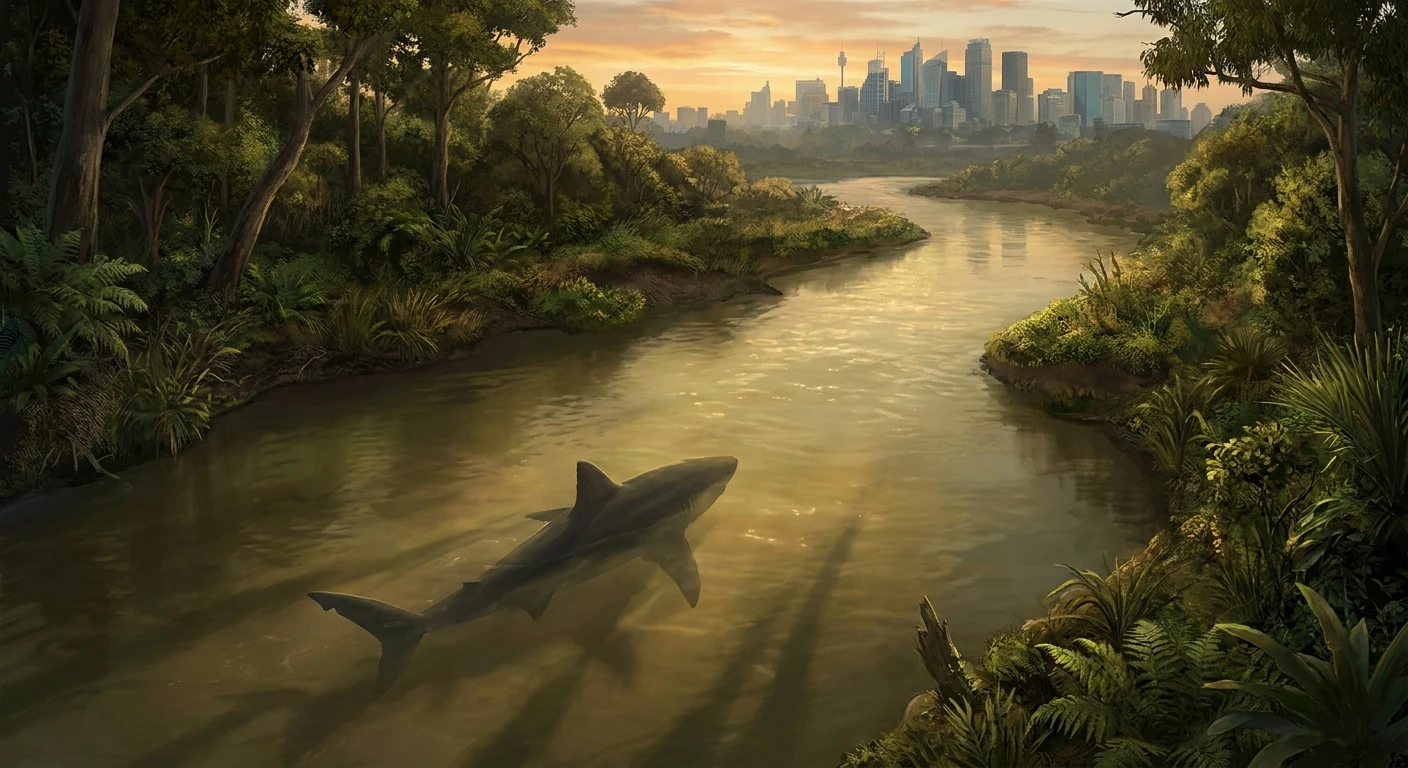
The Unvarnished Truth About Bull Sharks Brisbane River
If you are actively searching for facts about bull sharks brisbane river, you are definitely not the only person standing on the riverbank, staring at that murky brown water with a mix of genuine awe and heavy caution. I remember moving from Kyiv to Queensland a few years back. Growing up near the freezing, slow-moving Dnipro River, my biggest water concern was dropping my phone in the mud. Then, a local mate took me kayaking near West End and casually mentioned we were paddling directly over one of the most densely populated predator habitats on the east coast. That was a massive wake-up call.
My goal here is to break down exactly what these incredible apex predators are doing in our backyard. We are going beyond the standard sensational news headlines to look at their actual behavior, biological quirks, and how you can coexist safely. Whether you are an avid rower, a weekend fisherman, or someone who just bought waterfront property, understanding the realities of these animals is non-negotiable. They are a permanent fixture of the local ecosystem, and pretending they are not there is not a valid strategy.
Let’s get straight into the facts, strip away the Hollywood fiction, and give you a rock-solid foundation of knowledge.
Core Behavior: Why They Rule the Murky Waters
To truly grasp the situation, we need to look at why these specific animals choose this environment. The river is not just a random wandering path for them; it is a highly productive hunting ground and a crucial nursery. The muddy environment provides perfect camouflage for an ambush predator. They do not rely on perfect vision; instead, they use highly tuned senses to detect vibrations and electrical fields.
Here is a breakdown of how they utilize different zones:
| Habitat Zone | Primary Shark Activity | Human Risk Level |
|---|---|---|
| Lower Reaches (Mouth to Gateway) | Adult hunting, transition to ocean, high tidal movement | Moderate (Larger adults present) |
| Middle Reaches (City to Indooroopilly) | Foraging, following baitfish runs, juvenile growth | High (Heavy human recreation overlap) |
| Upper Reaches (Beyond Colleges Crossing) | Nursery grounds, birthing, pup feeding | Moderate (Mostly smaller juveniles, but still capable) |
The value proposition of the river for a predator is undeniable. Think about the massive schools of mullet that push through these channels annually. Think about the freshwater runoff that flushes nutrients into the system. Two prime examples of this adaptation can be seen near the Bremer junction, where juveniles feed heavily in absolute zero-visibility water, and around the Gateway Bridge pylons, where massive adults use the structure to ambush prey caught in tidal bottlenecks.
They absolutely love this waterway for a few specific reasons:
- Abundant Food Sources: The constant tidal flow traps massive quantities of baitfish, stingrays, and catfish, creating an endless buffet.
- Predator Protection for Pups: Larger oceanic sharks like Great Whites and Tigers cannot tolerate the fresh water, making the upper reaches a perfectly safe nursery for the babies.
- Favorable Salinity Gradients: The mix of salt and fresh water creates distinct ecological zones that concentrate prey in highly predictable areas.
Ancient Origins of the River Predators
These magnificent creatures did not just recently decide to swim upstream. Their lineage stretches back millions of years. Paleontological records indicate that the genus Carcharhinus has been navigating coastal estuaries long before any human settlements existed. The unique geography of the South East Queensland watershed, with its sprawling catchments and deep tidal channels, has functioned as an evolutionary playground. Ancient indigenous populations intimately knew about the presence of these animals, incorporating them into local lore and navigating the waters with immense respect for the apex predators sharing their food source.
Evolution of Coexistence in Queensland
As European settlement expanded along the banks in the 1800s, the relationship drastically changed. Early colonial records are full of dramatic accounts of livestock being taken while drinking at the river’s edge. Industrialization later choked the waterway with runoff and pollution, which temporarily disrupted the local food chains. However, the animals adapted rapidly. Their evolutionary hardwiring allowed them to thrive even as dredging deepened the channels and retaining walls replaced natural mangrove swamps. They proved incredibly resilient to urban disruption.
Modern State of River Ecosystems
Fast forward to the current landscape. Since the severe flooding events of the early 2020s, and now operating in the stable environmental conditions of 2026, the ecosystem is heavily monitored. University researchers have tagged dozens of residents, tracking their ping locations in real-time. We now know that they treat the entire stretch—from Moreton Bay right up to the Mount Crosby weir—as a single, interconnected highway. Water quality improvements have paradoxically brought more baitfish back, which in turn supports a very healthy, very active predator population right alongside our ferry terminals and riverside cafes.
Osmoregulation Explained Simply
You might wonder how a marine fish survives in muddy fresh water. The secret lies in a biological process called osmoregulation. Most marine fish placed in fresh water would literally absorb too much water, bloat, and die, while losing all the salt in their cells. These specific predators possess specialized kidneys and a highly adaptable rectal gland. When they move upstream, their kidneys drastically reduce the excretion of vital salts, and their liver adjusts the production of urea. They basically re-engineer their own body chemistry on the fly to match the surrounding salinity.
Sensory Biology in Murky Waters
If you drop your keys in the brown water, they are gone forever. So how does a massive animal hunt moving prey in zero visibility? They rely on the Ampullae of Lorenzini—tiny, gel-filled pores covering their snouts. These receptors detect the minute electrical pulses generated by the muscle movements and beating hearts of other fish. Furthermore, their lateral line system detects tiny pressure changes in the current, allowing them to feel a struggling mullet from yards away.
- Urea Retention: They hold onto urea in their bloodstream to maintain osmotic balance with the surrounding estuarine environment.
- Testosterone Levels: They possess incredibly high hormone levels, contributing to their aggressive hunting bursts and fast muscle twitch responses.
- Retinal Adaptations: Their eyes have a specialized tapetum lucidum layer, bouncing available microscopic light back through the retina to maximize whatever terrible visibility exists.
The 7-Day Actionable Plan for River Safety
Knowing the biology is great, but practical safety is what keeps you out of trouble. Whether you are moving to the area or planning a week of intense water sports, you need a protocol. Follow this daily guide to align your habits with local reality.
Day 1: Assess River Conditions and Clarity
Before you even touch a kayak paddle, evaluate the water. If there has been a recent storm, the water will be a thick, chocolate brown. Low visibility forces predators to rely entirely on bump-and-bite tactics. If you cannot see your hand a few inches below the surface, stay out of the water.
Day 2: Avoid Dawn and Dusk Zones
These animals are crepuscular hunters. This means they are most active during the twilight hours of dawn and dusk. Schedule your rowing, sailing, or shoreline fishing strictly during the high sun of midday. This simple scheduling shift reduces your risk profile astronomically.
Day 3: Monitor Rainfall and Runoff Maps
Heavy rain washes nutrients, dead animals, and debris from the streets into the catchment. This creates a feeding frenzy. In 2026, we have brilliant local weather apps that track catchment runoff. Make it a habit to check the flow rates. High runoff equals high feeding activity.
Day 4: Secure Pets and Children
Never play fetch with your dog by throwing sticks into the muddy banks, especially near drop-offs. The splashing mimics a wounded animal perfectly. Keep dogs on leashes near un-fenced embankments and ensure kids are playing in designated, netted beach areas only.
Day 5: Upgrade Your Water Gear
If you are kayaking or paddleboarding, ensure you are using highly visible, brightly colored gear. Avoid dangling your feet over the edges of a paddleboard in deep channels. If you fish, use proper long-handled nets rather than reaching your bare hands into the water to lip a catch.
Day 6: Learn Catch-and-Release Etiquette
If you hook a fish and it is struggling, reel it in quickly. Leaving a bleeding or thrashing fish on the line for too long acts as a dinner bell. If a predator grabs your catch, cut the line immediately. Do not attempt to fight a 400-pound animal for a small bream.
Day 7: Educate Your Community
Share local knowledge. If you see tourists swimming at dusk near a boat ramp, kindly walk over and explain the reality of the situation. Community awareness is the strongest defense we have against preventable tragedies.
Myths vs. Reality
Myth: They are only found near the river mouth.
Reality: Tagging data proves they swim incredibly far upstream, easily navigating past the city center, Indooroopilly, and well into the freshwater reaches beyond Ipswich. Do not assume distance from the ocean equals safety.
Myth: If you do not splash, they will not know you are there.
Reality: Their electroreception allows them to detect your heartbeat and muscle contractions. Being quiet does not make you invisible, though it does make you less interesting to them.
Myth: They intentionally hunt humans as a primary food source.
Reality: Humans are not on the menu. Almost all negative encounters are exploratory bites. The animal cannot see what is splashing, so it uses its mouth to investigate. Unfortunately, an exploratory bite from an animal this powerful is devastating.
Myth: The water is too polluted for them to survive.
Reality: They are incredibly hardy. They thrive in varying water qualities and actually use muddy, disturbed water to their tactical hunting advantage.
Frequently Asked Questions
Are there nets protecting the main city reaches?
No, the main channel is an open waterway. Only specific man-made lagoons like South Bank are artificially separated and safe for swimming.
How big do these predators get locally?
Adult females can easily exceed three meters in length and weigh over 300 kilograms. Juveniles are smaller but still pack a serious punch.
Is it safe to kayak or paddleboard?
Yes, thousands of people do it safely. Just stay on your vessel, avoid dusk/dawn, and do not trail your limbs in the water.
Do they travel in packs?
They are generally solitary hunters, though multiple individuals may gather in the same area if a massive food source, like a school of baitfish, is present.
What should I do if I see one while fishing?
Keep your hands out of the water, pull your lines in, and calmly move to a different spot. Do not try to feed or provoke it.
Why don’t authorities just remove them?
They are a crucial part of the ecological balance. Removing apex predators causes the entire food web to collapse, leading to disease and overpopulation of lesser species.
Can they survive entirely in fresh water?
They can survive for extended periods—often years for juveniles—but adults must eventually return to the ocean to breed and complete their life cycle.
What time of year is the most active?
Summer months bring warmer water, heavy rainfall, and breeding cycles, making them highly active from November through March.
Understanding the bull sharks brisbane river dynamic is all about respect and sensible boundaries. They are not mindless monsters; they are highly evolved survivors executing their natural behaviors in a shared environment. Keep these safety tips in mind, respect the murky depths, and you can absolutely enjoy everything the waterfront lifestyle has to offer. Stay safe, stay smart, and share this guide with anyone planning to spend time on the water!