
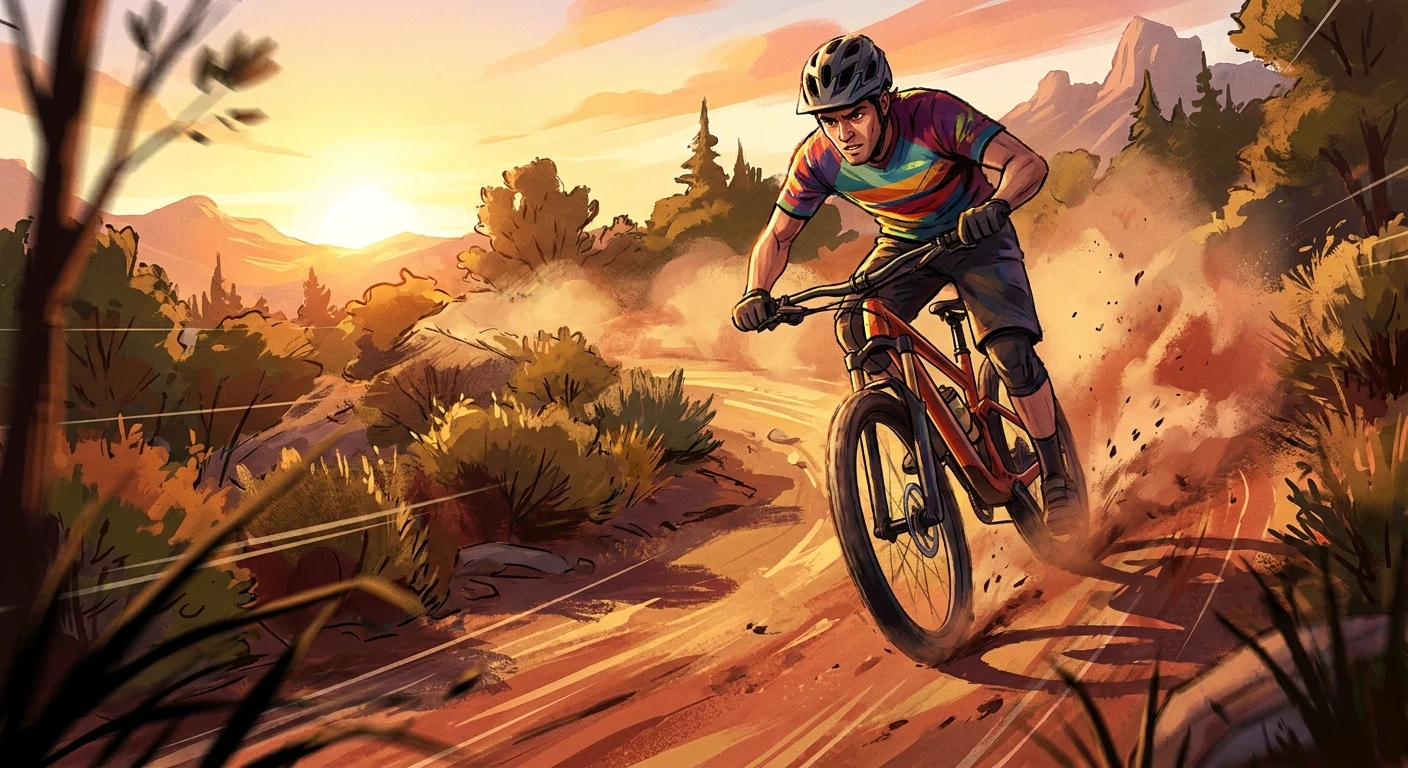
The Legacy of the Subaru Trailseeker Mountain Bike Series
The Subaru Trailseeker stands as a monumental fixture on the mountain biking calendar, demanding profound physical tenacity, sharp technical skills, and unwavering mental focus. Representing the pinnacle of mass-participation off-road racing, this event draws cyclists of all backgrounds to test their mettle against challenging terrains, steep gradients, and unforgiving natural elements. Mastering endurance mountain biking requires a comprehensive understanding of pacing, specialized nutrition, and meticulous mechanical preparation. By dissecting the structural demands of the race, riders can approach the starting line with absolute confidence and a clear tactical execution plan. The community surrounding this rugged race represents a unique blend of highly competitive elite athletes and dedicated amateur riders looking to push their personal physical boundaries. Riding these expansive trail networks offers a direct, visceral connection to nature, requiring absolute presence and concentration to navigate safely and efficiently. Through strategic preparation and a deep respect for the terrain, participants can elevate their off-road cycling experience and cross the finish line with a profound sense of athletic achievement.
Mastering the Core Demands of the Route
Endurance mountain biking provides immense physiological and psychological benefits, building massive aerobic engines while fortifying mental resilience. The sheer variety of terrain encountered during a typical race pushes the human body to adapt constantly, recruiting fast-twitch muscle fibers for sudden, explosive climbs and heavily relying on slow-twitch fibers for long, grinding ascents. Preparing for these dynamic shifts requires structured training blocks that mimic the route’s specific demands.
Read also: Jamie Murch: Cricket Career, Stats & Training Protocol; Understanding the Latest Ponga Injury and Recovery; Ultimate Guide to the jess fox Paddling Technique.
Understanding the exact specifications of the race categories helps riders align their current fitness levels with the appropriate challenge.
| Event Distance | Elevation Profile | Target Rider Level |
|---|---|---|
| Marathon (70km) | 1200m – 1500m Gain | Advanced / Elite |
| Half-Marathon (40km) | 600m – 800m Gain | Intermediate |
| Fun Race (20km) | 250m – 300m Gain | Beginner / Novice |
Participating in this event offers distinct value propositions that extend far beyond a simple finisher’s medal. First, completing the demanding seventy-kilometer marathon forces a rider to optimize their pedaling efficiency and master energy conservation over a multi-hour effort, skills that instantly upgrade a cyclist’s overall endurance capability. Second, successfully navigating the technical rock gardens, root-heavy singletracks, and loose gravel descents inherently improves reactive bike handling. This technical mastery translates to increased safety, better line choices, and overwhelming confidence on any recreational trail.
Executing a flawless race requires a highly systematic approach to energy management. Riders must adhere to a strict protocol:
- Strategic Pacing: Managing power output during the initial twenty kilometers prevents premature glycogen depletion, saving vital energy for the notoriously difficult final climbs.
- Hydration and Electrolytes: Consuming fluids infused with sodium and potassium at regular fifteen-minute intervals prevents cramping and maintains muscular function in high-heat conditions.
- Mental Resilience: Breaking the seemingly insurmountable race distance down into smaller, highly manageable five-kilometer segments prevents psychological fatigue and keeps the mind focused on immediate execution.
The Origins of the Trailseeker Phenomenon
The concept behind massive endurance mountain biking events originated from a fundamental need to bridge the gap between inaccessible elite cross-country racing and casual weekend trail riding. Early pioneers of the sport recognized that thousands of enthusiastic amateur cyclists possessed the fitness and desire to compete but lacked a well-organized, scalable platform. By designing race routes that showcased spectacular local geography while maintaining rigorous safety standards, early organizers created a blueprint that prioritized the rider’s experience above all else. This foundational philosophy allowed the movement to grow organically, attracting sponsors who recognized the immense demographic appeal of outdoor, family-friendly athletic events.
Evolution of the Race Formats
Initially, off-road races relied heavily on existing, often unmaintained dirt farm roads and jeep tracks, which provided distance but lacked technical complexity. As mountain bicycle technology evolved with the introduction of dual suspension, hydraulic disc brakes, and larger wheel diameters, route builders simultaneously adapted the courses. Modern iterations of the race now feature massive amounts of custom-built, hand-cut singletrack that challenges the maneuverability of modern bicycles. Electronic timing chips, remote medical evacuation teams, and fully stocked water points have transformed these events from rugged, self-supported survival tests into highly polished athletic productions.
Modern State and Ongoing Legacy
Today, the landscape of endurance mountain biking features sprawling race villages that act as the epicenter for weekend-long festivals. These venues offer extensive sponsor activations, technical support zones, and specialized recovery areas equipped with massage therapists and nutrition vendors. The ongoing legacy of these premier events is defined by their dual capacity to host intensely competitive UCI-level professional fields while simultaneously providing a welcoming, celebratory environment for novices completing their very first twenty-kilometer ride. This inclusive atmosphere guarantees the continuous growth and long-term sustainability of the mountain biking community.
Biomechanics of Mountain Biking Endurance
The biomechanical demands of off-road cycling differ vastly from smooth tarmac riding. Cyclists must constantly shift their center of gravity to maintain traction over loose surfaces, demanding extreme core stability and upper-body strength. Power delivery is rarely steady; it requires immense, repeated torque generation to overcome sudden, steep obstacles like rocky ledges or deeply rutted mud sections. This surging power output forces the athlete’s heart rate continuously into the anaerobic zone, necessitating highly efficient aerobic recovery mechanisms during the brief, technical descents where pedaling is impossible.
Technical Terrain Management and Equipment
Modern mountain bicycles are sophisticated engineering marvels designed to isolate the rider from the punishing vibrations of the trail. Frame geometry has radically shifted toward slacker head tube angles and longer wheelbases, significantly increasing stability during high-speed, steep descents. Suspension systems utilize complex pneumatic dampers that separate low-speed compression, caused by pedaling forces, from high-speed compression, caused by striking rocks. Choosing the correct tire tread pattern and casing thickness is an exact science that balances the need for aggressive cornering grip against the penalty of increased rolling resistance.
- Lactate Clearance Rates: Highly trained cyclists possess a superior physiological ability to buffer and metabolize lactic acid while maintaining sub-threshold power outputs.
- Suspension Kinematics: Advanced frame linkages utilize targeted anti-squat percentages to ensure chain tension counteracts suspension bobbing during hard acceleration.
- Tire Friction Coefficients: Running lower pneumatic pressures heavily increases the rubber’s contact patch, dramatically improving traction at the cost of marginally higher rolling drag.
- Neuromuscular Fatigue: The constant, violent vibration transmitted through the handlebars severely degrades grip strength and upper-body reaction times over extended durations.
Day 1: Volume Reduction and Recovery
The week preceding the race is entirely about shedding cumulative fatigue while retaining peak muscular activation. Training volume should be drastically reduced by up to sixty percent. A gentle, one-hour spin on flat terrain encourages blood flow to repairing muscle tissues without causing further micro-tears. Prioritizing deep sleep and adequate protein intake during this critical twenty-four-hour window accelerates the physiological taper process.
Day 2: High-Intensity Intervals
To prevent the cardiovascular system from becoming sluggish during the taper, implement a highly concentrated session of brief, intense efforts. A standard protocol includes a warm-up followed by five bursts of one-minute maximum effort sprints, separated by three minutes of total rest. This neurological stimulus keeps the fast-twitch muscle pathways firing optimally without depleting precious deep glycogen stores needed for the weekend.
Day 3: Complete Active Rest
The bicycle remains untouched on the third day. Focus entirely on mobility work, utilizing foam rolling and dynamic stretching to alleviate any residual tightness in the hip flexors, hamstrings, and lower back. Hydration must remain a constant priority, ensuring urine remains clear throughout the day to signify adequate baseline water retention.
Day 4: Gear Inspection and Tune-up
Mechanical failures on the trail can instantly ruin months of dedicated training. Perform a microscopic inspection of the bicycle. Check the derailleur hanger alignment, measure the chain for excessive wear, and replace the tubeless tire sealant. Ensure brake pads have a minimum of two millimeters of compound remaining and that the suspension sag is perfectly calibrated to the rider’s fully equipped race weight.
Day 5: Carbohydrate Loading Protocol
Forty-eight hours before the start gun fires, dietary focus shifts heavily toward complex carbohydrates. Increase the intake of rice, sweet potatoes, and whole-grain pasta while intentionally reducing dietary fats and heavy fibers that can slow digestion. The goal is to maximize hepatic and muscular glycogen saturation without inducing uncomfortable gastrointestinal bloating.
Day 6: Course Reconnaissance and Activation
A brief, twenty-minute ride is mandatory to ensure all mechanical systems are functioning flawlessly under load. Execute two short, thirty-second sprints to prime the aerobic system for the next morning. Lay out all race apparel, pack the hydration pack with precise nutritional requirements, and pin the race number to the jersey to ensure a stress-free, streamlined morning routine.
Day 7: Race Day Execution
Wake up precisely three hours before the start time to consume a highly digestible, familiar breakfast like oatmeal with a banana. Arrive at the venue early to secure a prime starting chute position. Once the race commences, adhere strictly to the predetermined pacing strategy, ignoring the initial adrenaline-fueled surges of surrounding competitors, and focus entirely on smooth, efficient forward momentum.
Myths and Realities of Off-Road Racing
Myth: You need a top-tier, ultra-expensive carbon fiber bicycle to participate.
Reality: While lighter equipment offers marginal time gains on climbs, modern aluminum frames equipped with updated geometry and reliable mid-tier components are completely adequate for finishing strong, safely, and comfortably.
Myth: The marathon distance is exclusively reserved for professional, sponsored athletes.
Reality: Consistent, disciplined pacing combined with adequate hourly nutrition allows dedicated amateur cyclists to easily finish well within the generous official cutoff times.
Myth: Mountain biking is predominantly a lower-body workout similar to road cycling.
Reality: Off-road riding requires immense upper-body strength and core stability to continuously maneuver the bicycle over obstacles and absorb massive impact forces.
Myth: You should consume massive amounts of pasta the night before the race.
Reality: Sudden, massive carbohydrate intake late in the evening causes severe digestive distress; loading should be gradual and completed primarily two days prior.
What is the minimum age to enter?
Participants must generally be fifteen years old to enter the half-marathon and nineteen for the full marathon, though fun races accommodate younger children under guardian supervision.
Do I need a professional racing license?
A full annual racing license is rarely mandatory for casual participants. Day licenses are typically available for purchase during the online registration process to cover fundamental event insurance requirements.
Are e-bikes allowed on the course?
Electronic bicycles are widely welcomed in specific, non-competitive starting batches to ensure they do not interfere with the podium results of the purely analog racing categories.
What happens if I get a flat tire?
Complete self-sufficiency is a core tenet of off-road racing. Riders are explicitly expected to carry their own spare tubes, inflation devices, and multi-tools to repair standard mechanical issues independently.
Are there water points on the route?
Yes, fully stocked water points are strategically positioned every fifteen to twenty kilometers, offering heavily diluted energy drinks, fresh water, and rapid-digesting foods like bananas and nougat.
Can I change my distance on race morning?
Downgrading distances is sometimes permitted by timing officials if requested early, but upgrading on race morning is strictly prohibited due to logistical constraints and medical profiling.
Is there a strict cutoff time for the marathon?
To ensure the safety of all participants and allow medical staff to clear the route before sunset, marathons typically enforce a strict six to seven-hour cutoff, managed at specific checkpoints.
Final Preparation and Next Steps
Tackling an event of this magnitude demands respect, rigorous training, and a deep appreciation for the unyielding nature of the trails. From understanding the biomechanical requirements to executing a flawless seven-day taper, every facet of preparation dramatically influences the final outcome. Gather your gear, finalize your nutritional strategy, and commit to the process. Register today, embrace the upcoming physical challenge, and prepare to conquer the ultimate off-road racing experience.