
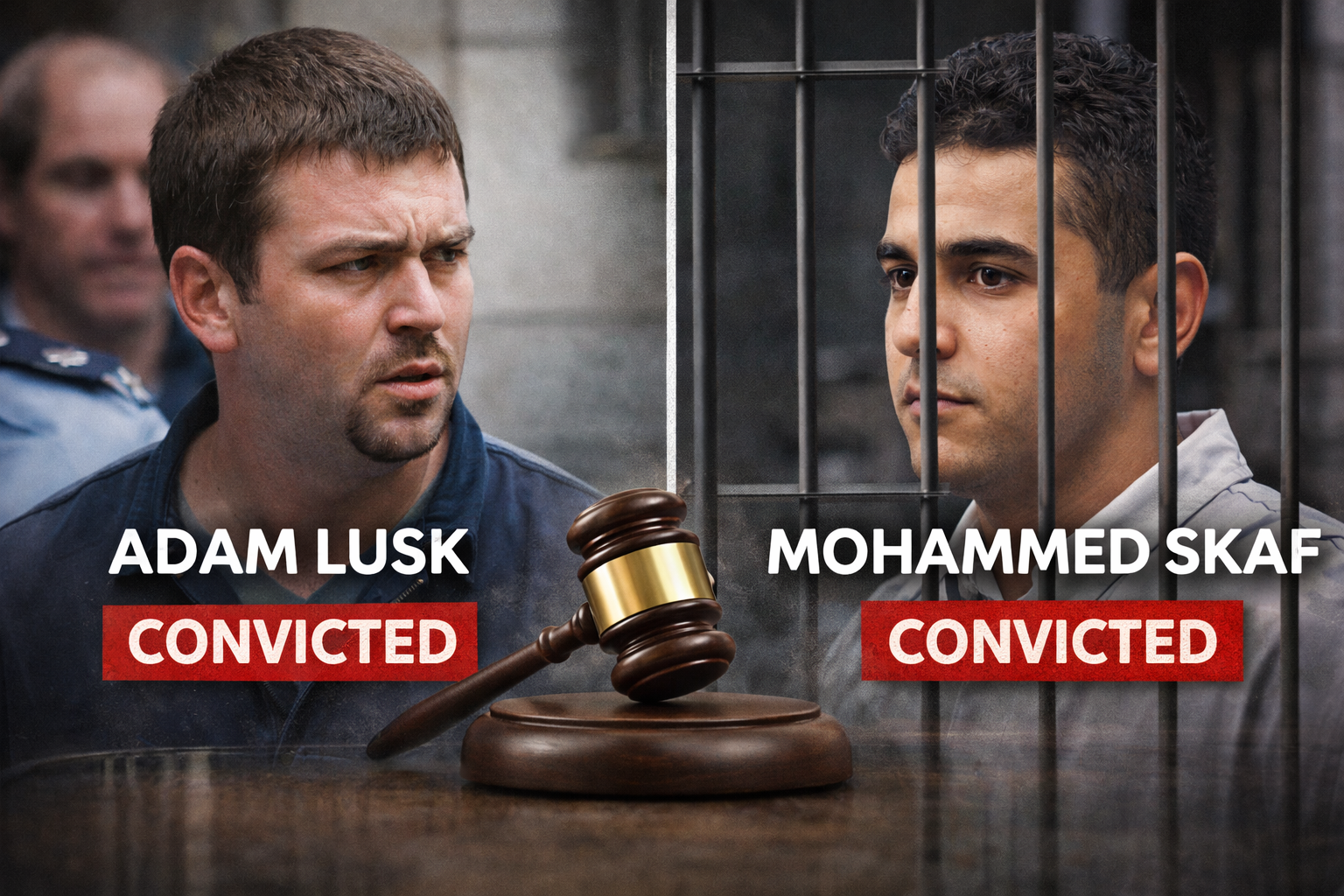
Sentencing Insights: A Deep Dive into the Recent Rulings for Adam Lusk and Mohammed Skaf
If you have been keeping an eye on the Australian legal landscape lately, you know that some names just keep popping up in the headlines. It is not just about the crimes themselves, but how our courts handle the aftermath. Two names that have sparked a lot of chatter recently are Adam Lusk and Mohammed Skaf. Honestly, trying to wrap your head around the legal jargon in these cases can feel like doing a burnout in a cul-de-sac-lots of noise, but you are not really getting anywhere.
So, let’s talk about it. Why do these sentences matter to the average person in Sydney or Melbourne? It is about the vibe of our justice system. Is it fair? Is it tough enough? Or is it just plain confusing? People are talking about these rulings over coffee and at the pub because they touch on something we all care about: safety and accountability.
The Case of Adam Lusk: Understanding the Context
Adam Lusk’s situation is one of those that makes you stop and think about how the law balances intent and outcome. When we look at sentencing in Australia, judges aren’t just picking numbers out of a hat. They have to weigh up the gravity of the offence against the prospects of rehabilitation.
Lusk’s recent legal hurdles have centered on specific incidents that led to significant jail time. But here is the kicker: sentencing is rarely a “one and done” deal. There are appeals, parole considerations, and the constant scrutiny of the public eye. In many ways, Lusk has become a bit of a case study for how the Victorian and NSW courts manage repeat offenders or high-profile incidents that capture national attention.
Know what? Most people think the judge just hits a gavel and that is it. But in reality, there is a massive amount of back-and-forth regarding “mitigating factors.” Maybe the guy had a rough upbringing, or perhaps there was a mental health angle that the jury didn’t see.
Mohammed Skaf and the Long Shadow of the Past
Now, if you want to talk about a name that carries a heavy weight in Australia, it is Mohammed Skaf. We are talking about cases that go back decades but still feel incredibly fresh for the victims and their families. Skaf’s involvement in the horrific gang rapes in Sydney during the early 2000s remains one of the darkest chapters in our criminal history.
Recently, the focus has shifted from the crimes themselves to the question of parole. This is where things get really heated. The NSW State Parole Authority has a massive job. They have to decide if someone like Skaf, who has spent a huge chunk of his life behind bars, is actually “safe” to walk among us again.
Honestly, the community response is usually a resounding “no.” And you can see why. The trauma from those events hasn’t just gone away. It has shaped how NSW laws were written afterward, specifically regarding sexual assault and group-based crimes.
Comparing the Sentencing Profiles
It is interesting to see how these two different paths through the justice system look when you put them side by side. While the crimes are vastly different, the public’s desire for “justice” remains the same.
| Feature | Adam Lusk Case Context | Mohammed Skaf Case Context |
|---|---|---|
| Primary Jurisdiction | Often associated with Victorian/NSW courts | New South Wales |
| Nature of Focus | Recent criminal activity and sentencing length | Long-term incarceration and parole eligibility |
| Public Sentiment | Concerns over recidivism | High emotional intensity and victim advocacy |
| Legal Mechanism | Standard sentencing guidelines | Strict parole conditions and specialized legislation |
How Australian Courts Actually Decide Your Fate
You might be wondering, “How does a judge actually decide if someone gets 5 years or 15?” It is not just a vibe check. They use something called “instinctive synthesis.” Sounds fancy, right? It basically means the judge looks at all the evidence, the victim impact statements, and the defendant’s history, then rolls it into one final decision.
But there are rules. We have maximum penalties for every crime, but we also have “standard non-parole periods.” This is the minimum time a person must spend in the big house before they can even think about asking for a release.
* General deterrence: Making sure other people don’t do the same thing.
* Specific deterrence: Stopping that specific person from doing it again.
* Rehabilitation: Trying to fix whatever went wrong in the first person’s head.
* Retribution: Basically, the “eye for an eye” part of the law, but civilized.
The Parole Puzzle: Why Is It So Hard to Get Out?
Parole is not a right; it is a privilege. For someone like Mohammed Skaf, the bar is set incredibly high. The authorities look at everything-behavior in prison, participation in programs, and the potential risk to the community.
In recent years, the laws in Australia have tightened up significantly. If you are a high-risk offender, you aren’t just walking out because you did your time. There are post-sentence detention orders and supervision orders that can keep a person under the thumb of the law for years after their “official” sentence ends.
Is it fair? Well, it depends on who you ask. Victims’ rights groups say it is the only way to keep us safe. Civil liberties groups sometimes argue that it goes against the idea of a finished sentence. It is a tough balance to strike, and our politicians are constantly tweaking the rules to stay on the good side of the voters.
Community Impact and the Role of Media
Let’s be real-the media plays a massive role in how we perceive these cases. When Adam Lusk or Mohammed Skaf is mentioned, the headlines aren’t exactly subtle. This “trial by media” can sometimes put a lot of pressure on the courts.
Judges are supposed to be impartial, but they live in the same world we do. They read the papers. They see the outrage. While they follow the law, the “community standard” is always a factor in how sentencing ranges are applied.
What We Can Learn from Recent Rulings
Looking at the outcomes for Lusk and the ongoing parole battles for Skaf, a few things become clear. First, the Australian public has very little patience for violent or repeat offenders. Second, our legal system is becoming more “victim-centric.”
In the old days, it was all about the “Crown vs. The Accused.” Now, the victim’s voice is much louder. Victim impact statements are a huge part of the sentencing hearing, often bringing the room to tears and giving the judge a very real sense of the damage caused.
| Metric | Historical Trend (90s-00s) | Modern Trend (2020s) |
|---|---|---|
| Victim Involvement | Minimal / Witness only | High / Impact statements are central |
| Parole Difficulty | Relatively standard | Extremely difficult for high-risk offenders |
| Sentence Lengths | Moderate | Increasing for violent/sexual crimes |
The Technical Side: Non-Parole Periods and Remissions
Let’s get a bit nerdy for a second, but I’ll keep it simple. When a judge says “10 years with a non-parole period of 7,” that 7 is the “hard time.” You aren’t getting out before then. In some states, you used to get “time off for good behavior” automatically, but that has mostly been scrapped for serious offences.
Now, you have to earn every bit of freedom. You have to take the courses, stay out of fights, and show that you actually regret what you did. For high-profile inmates, every single move is tracked. They are under a microscope.
Wait, What About the Cost?
One thing we don’t talk about enough is how much it costs to keep people like Lusk or Skaf behind bars. It is hundreds of thousands of dollars a year. That is your tax money going toward food, security, and healthcare for people who have broken the social contract.
This is why there is such a push for rehabilitation for non-violent offenders. We want to save that expensive prison space for the people who truly deserve it-the ones who are a genuine threat to our kids and our streets.
* Cost per prisoner per year: approx $110,000 – $150,000.
* Total Australian prison population: hovering around 40,000+.
* Re-offending rate: Still stubbornly high at around 40-50% within two years.
Is the System Broken or Just Evolving?
People love to complain that the system is broken. And yeah, when you see a sentence that seems too light for a heavy crime, it feels that way. But the law is a slow-moving beast. It changes through “precedent.” Every time a case like Adam Lusk’s goes through the courts, it sets a new bar for the next one.
The Skaf case, in particular, led to huge changes in how group-based crimes are prosecuted. It made it easier to lock up everyone involved in a gang activity, even if they weren’t the “leader.” That is a massive shift that came directly from public outcry and legal necessity.
The “Old Money” Logic of the Law
In a weird way, our legal system is very “old money”-it values tradition, slow changes, and a certain level of decorum. It doesn’t like to react too quickly to the “outrage of the week.” This is actually a good thing. It prevents us from becoming a society that hangs people based on a Twitter poll.
But, this also means it can feel out of touch. When a guy gets out on parole and immediately does something stupid, the system looks slow and incompetent. The reality is that it is just trying to follow a set of rules that were designed to be fair to everyone, even the “bad guys.”
Common Questions About the Australian Justice System
How does “Life Imprisonment” work in Australia?
Basically, it does not always mean you stay in jail until you die. It is usually a sentence with a very long non-parole period, like 20 or 30 years. However, for the most cooked crimes, a judge can order “Life without parole,” which means you are leaving in a box.
Why do some people get shorter sentences for similar crimes?
It comes down to the individual. One person might have pleaded guilty early (which saves the court money and the victims a trial), while another fought it to the end. That “early plea” usually gets you a discount.
Can the government stop someone from being released on parole?
Yes, they can. In NSW, the Attorney General can intervene in high-profile cases if they reckon the Parole Authority has made a dodgy call. It is a bit of a safety net for the community.
What is a “High Risk Offender” declaration?
It is a special tag the court puts on someone. It means even after their sentence is done, the state can keep them in jail or under super strict supervision because they are still considered a threat to society.
Do victims get a say in parole hearings?
They absolutely do. Victims can register to be notified and can submit their views to the Parole Authority. It is a massive part of the process now, ensuring the “human cost” isn’t forgotten.
Why do appeals take so long?
Because the legal system is buried in paperwork and “due process.” Every piece of evidence has to be checked, and both sides get to argue their point. It’s frustratingly slow, but it’s meant to prevent mistakes.
Does “good behavior” actually matter?
It matters a lot for your life inside, but it won’t necessarily get you out early anymore. Most sentences now have a fixed minimum. Good behavior just makes sure you actually get out when that minimum is up, rather than staying longer.
Wrapping It Up: Where Do We Go From Here?
At the end of the day, the cases of Adam Lusk and Mohammed Skaf serve as a mirror for our society. They show us what we are willing to tolerate and what we aren’t. While the headlines will eventually fade and new names will take their place, the legal precedents set by these rulings stay with us.
The Australian justice system isn’t perfect, and it’s definitely not simple. But it is ours. Whether you think the courts are being too soft or just right, staying informed is the only way to have a real say in the conversation. So, next time you see a headline about a sentencing appeal or a parole hearing, remember there’s a whole lot of history and complex law sitting behind that one sentence.
It is a tough gig for the judges and a painful journey for the victims. But as long as we keep talking about it and demanding accountability, the system has a chance to keep evolving into something that actually works for everyone.