Unearthing the Gold Rush Secrets of Gwalia Ghost Town
Stepping onto the dusty, sun-baked earth of Gwalia Ghost Town immediately transports visitors to an era where hardy prospectors staked their very livelihoods on the glittering promise of gold. Situated just south of Leonora in the vast, arid expanse of Western Australia, this settlement stands as a remarkably preserved snapshot of early twentieth-century mining life. Unlike typical historical reproductions, this site offers an authentic, raw look at an overnight exodus. On a sweltering day in December 1963, the Sons of Gwalia gold mine abruptly shut down its main underground shafts. Within a matter of hours, a bustling community of over a thousand residents vanished, leaving behind their homes, furniture, and daily belongings.
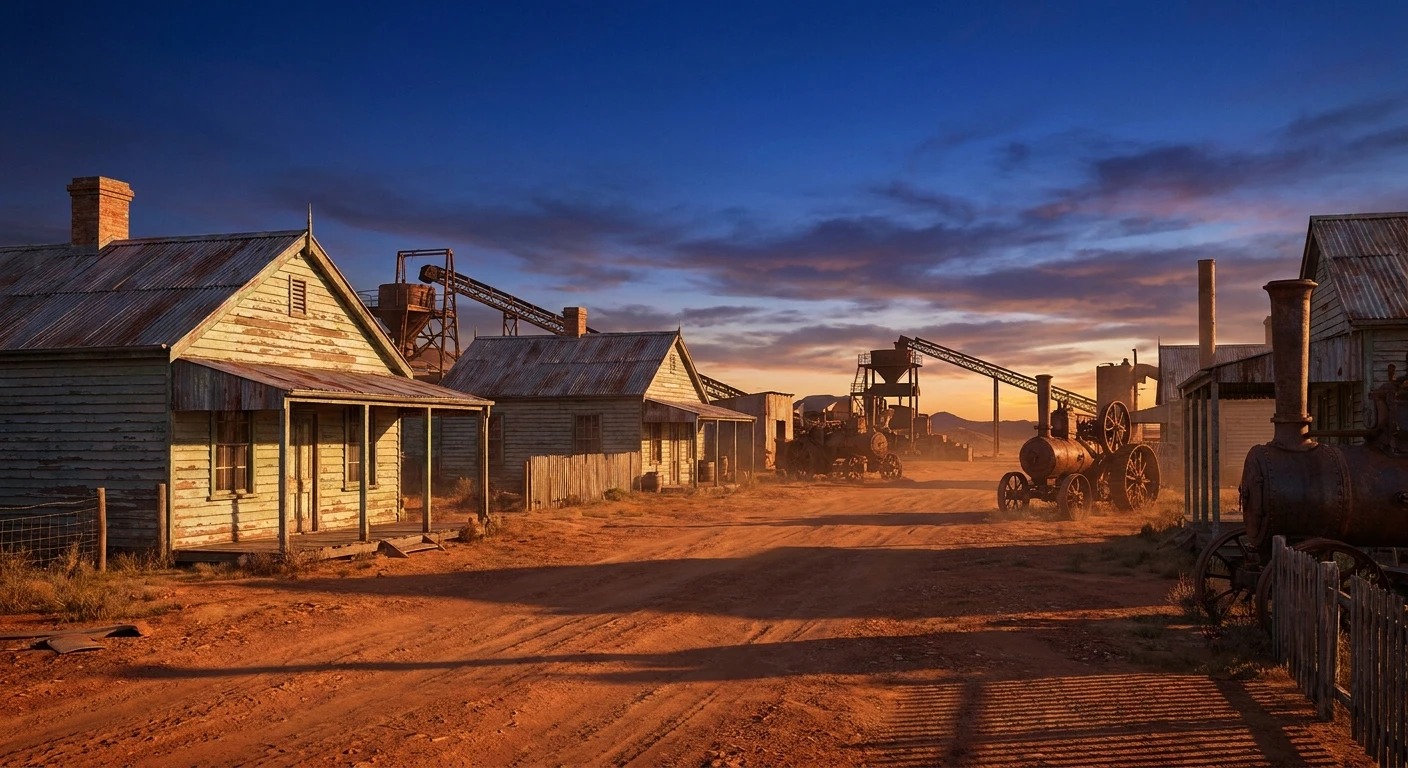
Today, the precinct functions as a sprawling, open-air museum. The rustic, corrugated iron cottages remain exactly as they were left, baking quietly under the relentless Australian sun. Exploring the sun-drenched streets provides a vivid understanding of the sheer isolation and resilience required to survive in the goldfields. It is a genuine step back in time, presenting the harsh, unvarnished realities of the outback boom-and-bust cycle without any artificial gloss or historical revisionism. The sheer scale of the abandonment leaves a lasting impression regarding the fleeting nature of industrial prosperity.
Read also: Discover The Station Hunter Valley Guide; Why You Need to Visit south sydney Right Now; Mount Druitt Stabbing Community Safety Guidelines.
Why You Need to Experience the Outback’s Frozen History
Grasping the true value of this historical precinct requires looking beyond the rusty facades. The raw authenticity of the abandoned homes offers a unique educational experience, starkly contrasting with modern, digitized entertainment. The site operates on a model of open preservation, allowing visitors to physically walk through the original tin miners’ camps and interact directly with the environment.
| Landmark | Historical Context | Visitor Experience |
|---|---|---|
| Hoover House | Former residence of mine manager Herbert Hoover, later the 31st US President. | A luxurious bed and breakfast offering panoramic views of the modern open-cut mine. |
| Gwalia Museum | Housed in the old mine office, containing extensive archives and vintage photographs. | Provides critical context regarding the daily struggles and triumphs of the early miners. |
| Miners’ Cottages | Flimsy, timber-and-iron shacks built hastily by European immigrants seeking fortune. | An interactive walkthrough showing how whole families lived in tight, extreme conditions. |
To truly maximize a visit to the Goldfields, follow these core principles:
- Begin at the highest vantage point near Hoover House to comprehend the scale of the original mining operations compared to the massive modern pit next door.
- Walk the self-guided heritage trail slowly, reading the interpretive plaques attached to each surviving shack, which detail the specific families who once lived there.
- Examine the vintage artifacts carefully; everything from rusting 1930s vehicles to abandoned kitchen stoves sits exactly where it was left over six decades ago.
These practical steps guarantee a comprehensive understanding of the settlement’s sudden demise. Experiencing the eerie sensation of seeing dinner plates left on tables and rusty bicycles leaning against fences is something that simply cannot be replicated in a traditional, glass-case museum format.
The Origins of a Golden Empire
The story begins in 1896 when three prospectors—Carlson, White, and Glendinning—stumbled upon a lucrative gold reef in the harsh outback. A Welsh syndicate soon purchased the claim, naming it the Sons of Gwalia, drawing on the ancient Welsh name for their homeland. This discovery sparked a frantic rush, rapidly transforming a desolate patch of dirt into a thriving commercial hub. A young, ambitious mining engineer named Herbert Hoover arrived in 1898 to manage the site. Hoover drastically cut costs, introduced Italian immigrant labor, and implemented strict operational efficiencies that set the mine on a path to becoming one of the most profitable in Australian history.
Evolution Through the Early 1900s
As the decades progressed, the settlement grew into a vibrant, multicultural community. Unlike the nearby government-planned town of Leonora, this camp grew organically, haphazardly sprawling outward from the mine shafts. Italian and Yugoslav immigrants built makeshift homes from whitewashed hessian, timber, and whatever corrugated iron they could scavenge. The community boasted its own state-run hotel, a cooperative store, and a bustling social scene fueled by the continuous extraction of wealth from the earth. Despite the harsh climate and lack of modern amenities, the town thrived, supported by a specialized narrow-gauge woodline railway system that brought essential timber and supplies across the unforgiving desert landscape.
The Modern State of the Abandoned Settlement
The golden era crashed violently to a halt in December 1963. After decades of deep underground extraction, aging infrastructure and falling gold prices forced the Sons of Gwalia mine to close. The sudden loss of employment caused an immediate mass exodus; the population plummeted from 1,200 to just 40 residents in less than a month. Families packed only what they could carry, leaving homes fully furnished. Today, thanks to the dedicated efforts of the local historical society, the remaining structures are meticulously maintained. The precinct operates as a world-class heritage site, perfectly balancing the decay of time with active, ongoing conservation efforts.
Geological Realities of the Goldfields
The geology of the Eastern Goldfields is famously complex, characterized by Archaean greenstone belts. The gold here is typically hosted in quartz veins within sheer zones, requiring sophisticated extraction techniques. In the early twentieth century, miners relied heavily on an incline shaft system. Instead of dropping straight down, the main shaft followed the natural 45-degree dip of the ore body. This unique engineering feat allowed the Sons of Gwalia to reach staggering underground depths, eventually stretching over thousands of meters down the incline. Bringing the heavy ore to the surface required immense mechanical power, primarily driven by massive, wood-fired steam engines that consumed vast quantities of local mulga timber.
Heritage Conservation Mechanics
Preserving fragile timber and iron structures in an extreme desert environment requires precise technical intervention. The arid climate naturally prevents rapid organic rot, yet the intense UV radiation and frequent thermal expansion heavily degrade building materials.
- Structural stabilization: Heritage architects utilize hidden steel bracing to support leaning timber frames without altering their visual appearance.
- Corrosion management: Rusting corrugated iron is periodically treated with specialized, clear sealants to halt oxidation while maintaining the authentic weathered aesthetic.
- Archival cataloging: The museum employs climate-controlled storage for delicate paper records, vintage photographs, and textiles left behind in the 1963 exodus.
- Cyanide extraction legacy: Soil monitoring ensures the historical areas where intensive gold processing occurred remain safe for modern foot traffic.
These specialized conservation techniques guarantee that the historical integrity remains entirely intact for future generations of historians and tourists to study safely.
Step 1: Arriving in the Outback Region
Reaching this remote destination requires preparation and planning. The site sits roughly 830 kilometers northeast of Perth. Travelers typically drive the Golden Quest Discovery Trail, a fully sealed, spectacular route winding through the heart of the outback. Ensure your vehicle is fully serviced and carry extra water before departure.
Step 2: Checking into Hoover House
For total immersion into the era, book a room directly at Hoover House. This historic manager’s residence has been beautifully transformed into a premium bed and breakfast. Staying overnight allows you to watch the sunset cast long, dramatic shadows across the rusted machinery and empty, silent streets.
Step 3: Navigating the Historical Museum
Dedicate at least two solid hours to the main museum located in the old brick mine office. Review the passenger logs of early immigrants, examine the vintage assay equipment, and study the intricate geological maps that detail the extensive, abandoned underground tunnel network.
Step 4: Exploring the Unlocked Cottages
Wander freely through the residential precinct. Many tin shacks are left completely open, complete with original 1950s linoleum flooring, iron bed frames, and enamel teapots sitting on wood stoves. Walking through these silent rooms provides a stark realization of the harsh living conditions endured by early mining families.
Step 5: Photographing the Rusting Relics
Bring a wide-angle lens for your camera. The striking visual contrast between the bright cobalt blue outback sky and the rich, red oxide of rusting trucks, massive timber headframes, and abandoned steam engines creates incredible photographic opportunities. Early morning light yields the best dynamic range.
Step 6: Observing the Modern Mining Operations
Stand at the elevated lookout point to view the immense modern open-cut mine. Modern operators use massive, high-tech machinery to extract gold from the very same geological deposits that the original pioneers chased manually underground.
Step 7: Reflecting at the Old State Hotel
Conclude your visit at the imposing facade of the former State Hotel. While it is no longer serving cold drinks to thirsty miners, the two-story structure stands as a grand monument to the social center of a bygone era. It is the perfect spot to digest the sheer historical weight of the goldfields.
Myth: The settlement is completely abandoned and entirely lawless.
Reality: The precinct is a highly regulated, safely managed heritage site operated by the local Leonora Shire, complete with full-time caretakers and daily maintenance routines.
Myth: Visitors can freely take artifacts and rusty souvenirs from the ground.
Reality: The entire area is strictly protected by stringent heritage laws. Removing even a single rusted nail, piece of glass, or rock is a severe legal offense.
Myth: The gold beneath the town is entirely depleted.
Reality: Commercial mining remains highly active today. Modern companies operate a massive, highly profitable open-cut pit right next to the historical footprint.
Myth: Ghost towns are inherently haunted by supernatural entities.
Reality: The term merely refers to an abruptly abandoned settlement that still contains visible remnants of its former population, holding historical rather than paranormal significance.
Myth: The site is just a pile of unidentifiable rubble.
Reality: It features dozens of fully intact buildings, vintage vehicles, and a world-class museum carefully preserving the pioneer history.
Where exactly is the settlement located?
It is situated immediately adjacent to the town of Leonora in the vast Goldfields-Esperance region of Western Australia, deep in the outback.
How much does entry cost?
Entry is typically managed by a modest donation or small fee at the main museum building, which directly funds the ongoing architectural preservation efforts.
Can you stay overnight on the grounds?
Yes, the historically significant Hoover House operates as a fully functional, period-accurate bed and breakfast for guests looking for an immersive experience.
Do you need a 4WD vehicle to visit?
No, the main regional roads leading to the site and the town of Leonora are fully sealed and easily accessible by standard two-wheel-drive vehicles.
What is the best time of year to go?
The cooler autumn and winter months, specifically between April and September, offer the most comfortable temperatures for walking the exposed outdoor trails.
Are there guided tours available?
While the site is primarily designed to be self-guided with excellent interpretive signage, the knowledgeable museum staff occasionally host specialized group talks upon request.
Is the site accessible and safe for children?
Absolutely. It serves as an excellent, interactive educational destination for families, provided children are supervised closely around the historical metal relics.
Conclusion: Gwalia Ghost Town stands as a stark, fascinating monument to the relentless ambition and abrupt, harsh realities of the Australian gold rush. Perfectly preserved in the dry outback air, it offers a totally unique, interactive journey into a vanished way of life. Plan your road trip, secure your historical accommodation, and step directly into the silent, sun-scorched pages of history today!