
Discovering The Station Hunter Valley: A Community Hub
When you look for a venue that flawlessly blends historical charm with modern community utility, The Station Hunter Valley emerges as an absolute standout in the region. Located at the heart of civic life, this precinct has effectively transformed from a traditional transit hub into a bustling center of culture, commerce, and connection. If you are organizing a massive public festival, planning a quiet weekend stroll among artisan pop-ups, or simply seeking a unique architectural backdrop for a corporate gathering, this revitalized space delivers unmatched versatility. The core thesis of this guide is simple: understanding the multifaceted nature of this venue allows you to maximize your experience, whether you are a first-time visitor, a local vendor, or an event organizer looking for the perfect canvas. We will explore the structural history, the modern amenities, the technical urban planning that made the revitalization possible, and the practical steps you can take to engage with everything this incredible destination has to offer.
The beauty of adaptive reuse projects lies in their ability to respect the past while boldly serving the future. The venue stands as a testament to this philosophy, preserving the grand heritage masonry of the original architecture while outfitting the spaces with the electrical, acoustic, and logistical infrastructure required for contemporary events. As we break down the specifics of this precinct, you will discover exactly why it has become a cornerstone of local culture and how you can best interact with its many zones.
Read also: Why You Need to Visit south sydney Right Now; Who is danica mason? Her Incredible Digital Wellness Rise; Who is marat ganiev? The Complete Creative Guide.
Understanding the Core Offerings and Venue Capabilities
To truly grasp the value of this precinct, you have to look at how the space is divided and utilized. The venue is not just one large empty hall; it is a meticulously zoned precinct designed to host multiple types of activations simultaneously without cross-interference. The value proposition is clear: organizers gain access to a heritage-listed backdrop with modern amenities, while visitors enjoy a safe, accessible, and aesthetically pleasing environment.
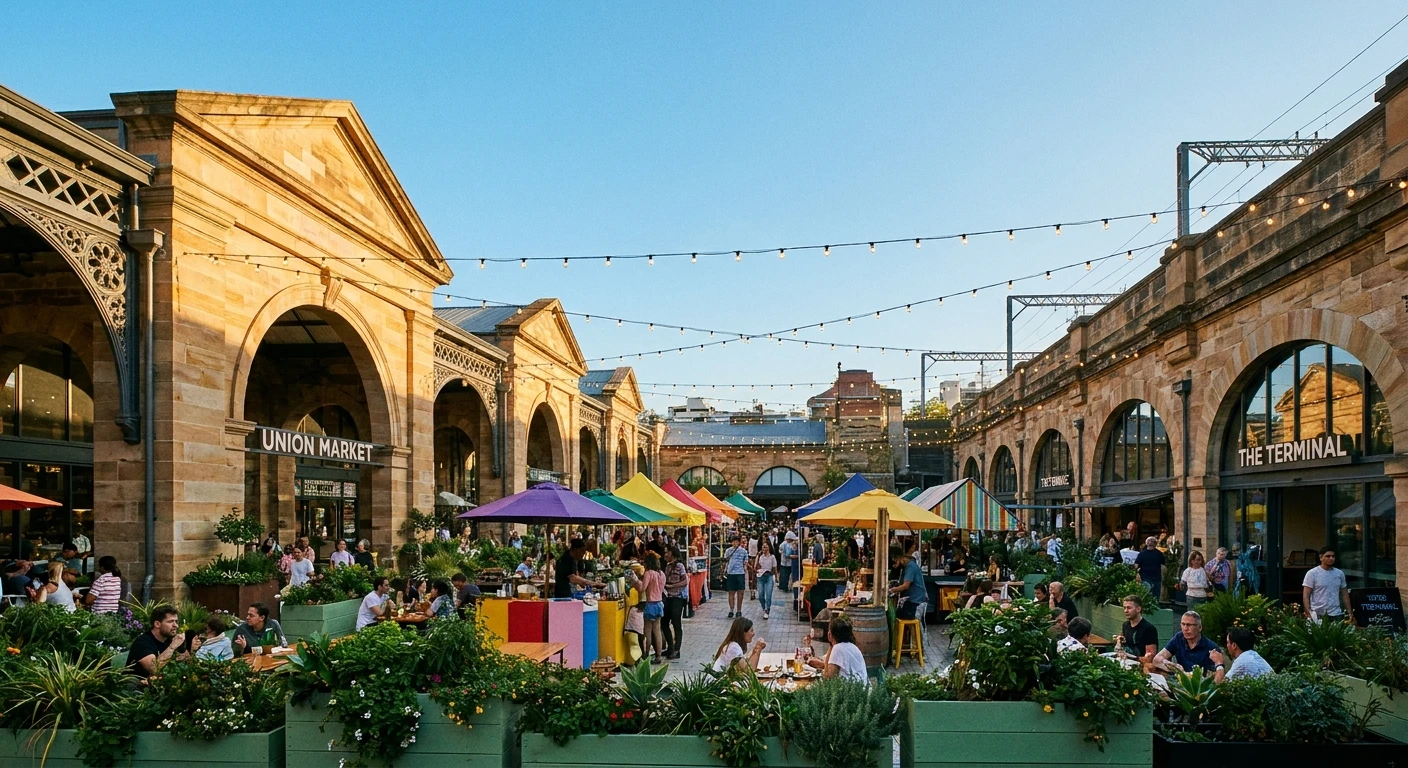
Consider two distinct examples of its utility. First, large open-air food and wine festivals utilize the expansive outdoor piazza, allowing hundreds of attendees to navigate seamlessly between tasting stalls, live music stages, and seating areas. Second, boutique weekend artisan markets take advantage of the sheltered platform areas, providing vendors with weather protection while maintaining an airy, open-market atmosphere that encourages casual browsing and community interaction.
| Zone Name | Primary Function | Key Features & Capacity |
|---|---|---|
| The Platform | Sheltered Markets & Exhibitions | Weather protection, heritage roofing, ideal for 50+ vendor stalls. |
| The Piazza | Large-Scale Outdoor Festivals | Open-air, flexible layout, high foot-traffic capacity, stage integration. |
| Heritage Retail Rooms | Pop-up Shops & Boutiques | Lockable interiors, historical masonry, intimate customer experience. |
Beyond the physical spaces, the precinct offers several distinct benefits that elevate it above standard event venues:
- Unmatched Central Accessibility: Situated near active public transport networks, parking structures, and pedestrian corridors, the venue ensures that arriving and departing is frictionless for massive crowds.
- Versatile Event Hosting Infrastructure: High-capacity power access, integrated waste management strategies, and modular fencing capabilities allow event planners to scale their operations up or down with ease.
- Rich Historical Aesthetics: The preservation of 19th-century railway architecture provides a built-in atmosphere that requires minimal additional styling, saving organizers money while offering visitors a visually striking environment.
The History and Origins of the Precinct
Origins of the Railway Infrastructure
The story begins well over a century ago when the region required a robust transportation network to handle the rapid expansion of industry, agriculture, and passenger travel. The original railway station was designed as a grand terminus, reflecting the economic optimism of the era. Architects of the time utilized local sandstone, heavy timber framing, and expansive iron roofing to construct a facility that was as much a civic monument as it was a functional transit hub. For decades, it served as the bustling gateway, connecting rural outputs with coastal shipping ports and facilitating the daily movement of thousands of citizens. The sheer volume of passenger traffic necessitated continuous expansions, resulting in the long platforms and sprawling concourses that define the footprint today.
The Evolution and Decommissioning
As the decades progressed, the nature of urban transit began to shift. The rise of personal automobiles, changes in regional freight logistics, and the development of new, high-speed rail corridors meant that the heavy rail lines penetrating deep into the civic center were eventually deemed inefficient. Urban planners recognized that the tracks were severing the downtown area from the waterfront, leading to a massive infrastructure overhaul. The difficult decision was made to truncate the rail line, effectively decommissioning the historic terminus. For a brief period, the grand buildings sat quiet, their future uncertain as debates raged over whether to demolish the structures to make way for modern commercial real estate or to find a new purpose for the beloved heritage site.
The Modern State and Community Revival
Fortunately, heritage conservation won the debate. A comprehensive revitalization initiative was launched, driven by the vision of returning the site to the people. The tracks were removed, but the platforms, ticket offices, and grand facades were meticulously restored. Today, the modern state of the precinct is a triumph of community-focused urban design. The transition from a noisy, industrial rail terminus to a pedestrian-friendly, beautifully landscaped civic square has breathed new life into the district. It now stands as an active public square where history and contemporary lifestyle intersect seamlessly on a daily basis.
Scientific and Technical Deep Dive: Architectural Restorations
Structural Adaptive Reuse Techniques
Transforming a 19th-century heavy rail terminus into a 21st-century public venue requires advanced engineering and architectural science. Adaptive reuse is not merely about painting old walls; it involves complex structural diagnostics to ensure safety under new load conditions. Engineers conducted ground-penetrating radar surveys to map the subterranean brick vaults and drainage systems originally built to handle steam train runoff. To stabilize the heritage masonry, specialists utilized breathable silicate consolidants that strengthen the decaying sandstone without trapping harmful moisture. Furthermore, the massive iron awnings spanning the platforms underwent rigorous non-destructive testing, including ultrasonic thickness measurements, to detect micro-fractures before applying modern anti-corrosion marine-grade coatings.
Urban Integration and Pedestrian Flow Dynamics
From an urban planning perspective, the precinct is a masterclass in pedestrian flow dynamics. When the tracks were removed, urban designers utilized spatial syntax analysis—a mathematical method of modeling human movement through open spaces—to determine where to place the new thoroughfares, seating nodes, and entry points. By analyzing sightlines and natural walking trajectories, they integrated the site into the surrounding city grid, effectively removing the barrier that the railway once created. This scientific approach to spatial design ensures that even during high-capacity events with thousands of attendees, crowd bottlenecks are minimized, and evacuation routes remain clear.
- Acoustic Management: The installation of sound-dampening baffles within the heritage roof structures prevents the echoing typically associated with large train sheds, making live music viable.
- Thermal Mass Utilization: The thick original brickwork is utilized for passive cooling during hot summer days, absorbing ambient heat and releasing it slowly at night.
- Stormwater Harvesting: Modern permeable paving was installed in the outdoor zones, allowing rainwater to filter into underground catchment tanks used for watering the precinct’s landscaping.
- Lux-Level Optimization: LED lighting grids were retrofitted into the original gas-lamp fixtures, providing safe, high-visibility illumination that complies with modern safety codes while retaining a warm, historic color temperature.
Step-by-Step Guide to Maximizing Your Venue Experience
Step 1: Researching Upcoming Local Events
Before you even leave your house, the first step to enjoying the precinct is checking the official event calendar. Because the space is highly versatile, the atmosphere changes drastically from week to week. You might find a vintage clothing market one weekend and an international food truck festival the next. Knowing what is scheduled allows you to plan your arrival time, budget, and group size accordingly. Always look for seasonal highlights, as the venue frequently hosts specialty winter night markets or summer outdoor concerts.
Step 2: Navigating the Transport Options
Despite no longer being a functional heavy rail station, the site remains incredibly accessible. For a smooth visit, map out your transport strategy. If you are driving, locate the nearest municipal parking garages, as on-site parking is often restricted during major events to prioritize pedestrian safety. Alternatively, utilize the modern light rail networks or rapid transit buses that drop passengers off just a short walk from the main entrance, ensuring you avoid traffic congestion entirely.
Step 3: Exploring the Heritage Architecture
Once you arrive, take the time to do a self-guided architectural tour. Look closely at the intricate stonework around the old ticketing windows and observe the massive timber trusses supporting the platform roofs. By actively paying attention to these historical details, you enrich your visit, transforming a simple day out into an engaging educational experience about regional industrial history.
Step 4: Supporting Local Pop-Up Retailers
The precinct is designed to function as an incubator for small local businesses. Make it a point to visit the heritage retail rooms that line the main concourse. These spaces are often leased on a short-term basis to local artisans, jewelers, and craftmakers. Purchasing an item here directly supports the regional creative economy and guarantees you walk away with a unique, handmade product rather than a mass-produced souvenir.
Step 5: Enjoying the Culinary Offerings
No visit is complete without sampling the food. Depending on the day, the venue may host a fleet of gourmet food trucks or feature semi-permanent cafe installations. Take advantage of the open-air seating in the piazza to enjoy your meal. The diverse culinary lineup usually reflects the rich agricultural outputs of the broader region, offering everything from locally sourced wood-fired pizzas to artisanal gelatos.
Step 6: Utilizing the Family-Friendly Spaces
If you are visiting with children, the precinct offers numerous safe, enclosed spaces for them to burn off energy. The flat, open expanses where the tracks used to lie are perfect for scooters, while the interactive water features and shaded seating areas provide a comfortable base camp for parents. The venue’s design prioritizes accessibility, making it easy to navigate with strollers.
Step 7: Planning Your Own Private Event
If you are an organizer, the final step is realizing the potential of the space for your own needs. The management offers comprehensive venue hire packages. Whether you are planning a corporate retreat, a large-scale wedding, or a community fundraiser, engaging with the site coordinators early allows you to leverage their event infrastructure, ensuring your function is seamless, memorable, and visually stunning.
Myths and Reality About the Precinct
Because the precinct underwent such a dramatic transformation, several misconceptions still circulate among those who haven’t visited recently. It is important to clear these up so you know exactly what to expect.
Myth: The space is still an active, functional transit train station.
Reality: All heavy rail operations ceased years ago. The tracks were completely removed, and the area was entirely redeveloped for pedestrian, retail, and event use. You will not find any passenger trains arriving here.
Myth: There is a mandatory entry fee just to walk through the grounds.
Reality: The precinct operates as an open public space. Unless there is a specific, ticketed private event or a fenced-off concert, you are free to walk through the beautiful architecture, use the seating, and enjoy the atmosphere at no cost.
Myth: The venue is exclusively for massive corporate events and large festivals.
Reality: While it does host large festivals, it is fundamentally a community hub. On any given weekday, it serves as a peaceful thoroughfare, a spot for morning coffee, or a location for small-scale community yoga classes.
Myth: Finding food or amenities on-site is difficult when there are no events.
Reality: The precinct features a rotating selection of pop-up shops, permanent cafes, and pristine public restroom facilities that are accessible year-round, ensuring visitor comfort even on quiet days.
Frequently Asked Questions & Conclusion
Is The Station Hunter Valley open to the public every day?
Yes, the precinct is designed as a public thoroughfare and civic square, meaning the general grounds are open daily. However, specific retail shops or enclosed event spaces operate on their own distinct hours.
Can I hire the venue for a private wedding or corporate gala?
Absolutely. The venue management offers highly customizable hire packages. You can rent specific zones like the main platform or the entire precinct depending on the scale of your event.
Are dogs allowed on the premises?
Yes, the outdoor areas are generally dog-friendly, provided your pet remains on a leash at all times and you clean up after them. However, specific large-scale events may impose their own pet restrictions for safety.
Is the venue fully wheelchair accessible?
The revitalization project prioritized modern accessibility standards. The grounds are predominantly flat, featuring smooth paved surfaces, ramp access where necessary, and compliant accessible restroom facilities.
Are there ATM facilities available on site?
While there may be temporary ATMs brought in for major festivals, most of the permanent pop-up retailers and surrounding city infrastructure operate seamlessly on a cashless basis. It is advisable to bring a card.
How do retail pop-ups operate here?
The heritage rooms are leased on flexible, short-term contracts. This allows emerging local businesses to test the market without committing to long-term commercial leases, ensuring a constantly changing retail environment.
Who manages the community activations and maintenance?
The precinct is typically overseen by a combination of state government property management entities and local council initiatives, working together to ensure the heritage site remains vibrant and well-maintained.
In conclusion, taking the time to explore this beautifully revitalized space offers immense rewards. By blending historic grandeur with highly functional modern urban design, it serves as a perfect example of how civic infrastructure can evolve to meet modern needs. Whether you are attending a vibrant weekend market, admiring the restored sandstone masonry, or organizing an event of your own, there is always something new to experience here. Do not miss out on what this iconic location has to offer. Plan your trip, check the upcoming events calendar, and discover the magic of the precinct today!