Why an Afghan Gallery is Your Next Must-Visit Destination
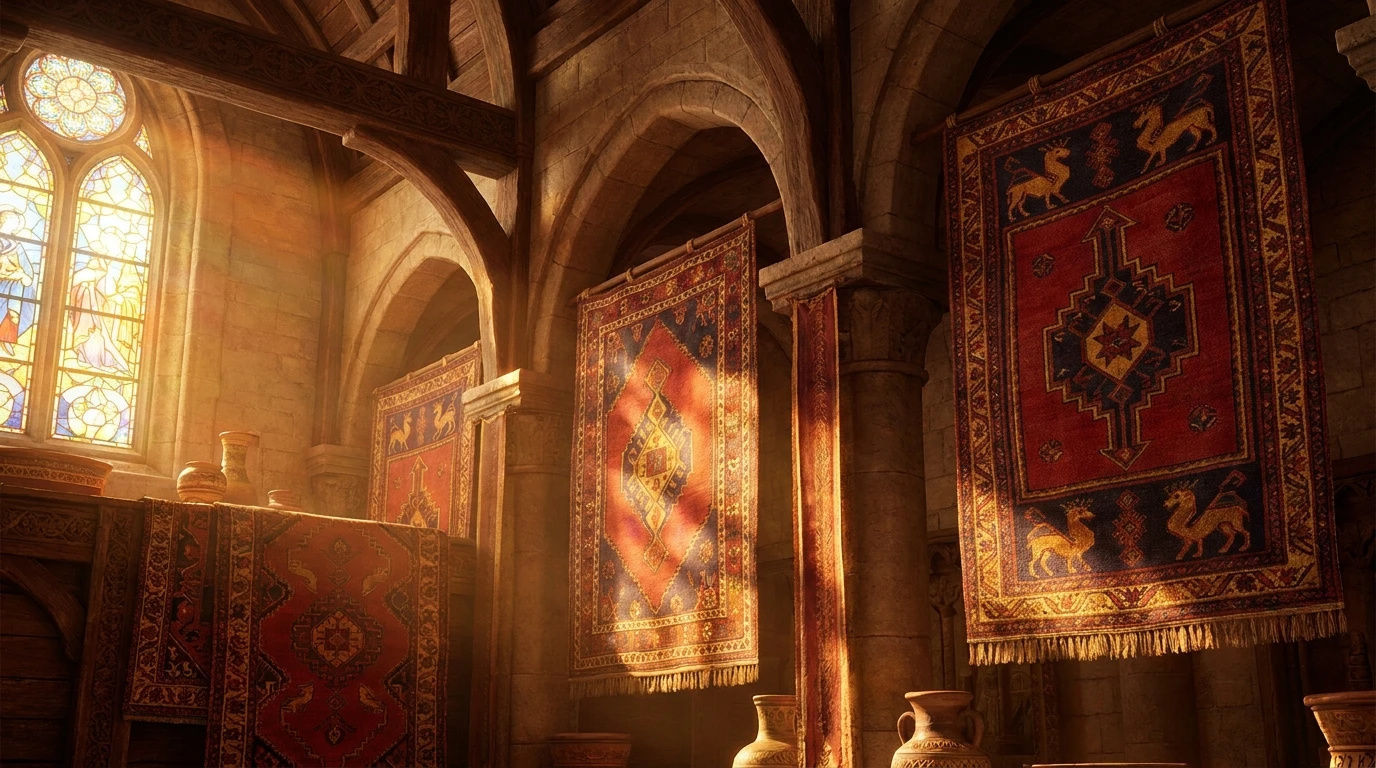
Have you ever walked into an afghan gallery and felt completely transported to a totally different era and mindset? It’s a wild feeling. Let me set the scene for you. Just last month, I was wandering through the historic Podil district right here in Kyiv, trying desperately to escape my usual boring coffee shop routine. I stumbled upon this hidden gem on a quiet side street—a tiny, unassuming but absolutely mesmerizing space packed from the floor to the ceiling with handwoven masterpieces. The earthy smell of old wool, natural dyes, and faint spices hit me immediately the moment I opened the door. It really got me thinking about how much incredible, painstakingly created art we just walk past every single day while staring at our phones. You absolutely do not need an expensive plane ticket to experience absolute wonder. Finding a dedicated cultural space that showcases these intricate, handmade pieces changes how you view global craftsmanship entirely.
The sheer, relentless dedication behind every single thread is mind-blowing. People often mistakenly think of these spaces as just fancy rug shops, but that couldn’t be further from the truth. They are living, breathing archives of human history and resilience. The vibrant reds, the deep oceans of indigo, and the insanely complex geometric patterns tell generational stories of nomadic tribes, harsh winters, and passed-down survival skills. Whether you’re a hardcore interior design junkie or just someone looking to inject a little actual soul into your stark apartment decor, stepping inside one of these places shifts your entire perspective. So, let’s talk about what actually makes these places so incredibly special, how to navigate them without getting completely overwhelmed by the choices, and why, right now in 2026, supporting and preserving this specific art form is more crucial than ever before.
When you really look closely at what an afghan gallery offers, you start to realize it is vastly different from a standard modern art museum or a big-box home goods store. This is about tactile history. These spaces curate items that blur the line between highly functional household goods and museum-quality fine art. You aren’t just buying something to cover a cold floor; you are acquiring a piece of someone’s life, months of their labor, and a design language that has survived centuries of conflict and change. The aesthetic transformation these pieces provide is unmatched. Take, for example, a stark, modern minimalist living room featuring lots of concrete and glass. Drop a vibrant, deeply red Khal Mohammadi rug right in the center, and the entire energy of the room shifts from cold to incredibly warm and inviting. Another great example is the integration of traditional Lapis Lazuli jewelry or intricate brass pottery into your daily wear or home office shelves. It instantly adds a layer of well-traveled sophistication.
Let’s break down exactly what you can expect to find when you start exploring these spaces:
| Item Type | Key Characteristics | Expected Lifespan |
|---|---|---|
| Handwoven Rugs & Kilims | Wool on wool foundation, strictly natural plant-based dyes, asymmetrical knots. | 100+ years with proper basic care. |
| Lapis Lazuli Jewelry | Deep celestial blue hues, embedded in handcrafted oxidized silver settings. | Generational heirloom (Indefinite). |
| Traditional Pottery & Brass | Vibrant turquoise glazing, intricate hand-painted geometric or floral motifs. | Fragile but lasts centuries if undisturbed. |
Beyond the physical items, there is a massive value proposition to engaging with a reputable gallery rather than a random online marketplace. Here is exactly why you should prioritize these dedicated spaces:
- Authentic, Ethical Sourcing: A proper space works directly with the weaving families and artisan co-ops, ensuring that the people actually doing the backbreaking work are paid fairly.
- Expert Curation and Vetting: You don’t have to guess if a piece is actually handmade or machine-loomed in a massive factory. The curators have already done the intense vetting for you.
- Deep Cultural Education: You leave with a story. You know exactly what region the piece came from, what the symbols mean, and the history of the materials used.
The Ancient Silk Road Origins
To truly appreciate what you are looking at, you have to mentally travel back thousands of years. The origins of these specific art forms are deeply tied to the ancient Silk Road, a massive, sprawling network of trade routes that connected the East to the West. The region we now know as Afghanistan was essentially the ultimate crossroads of the ancient world. Nomadic tribes needed heavy, durable textiles to survive brutally freezing winters in the mountains. They didn’t weave rugs for decoration; they wove them for absolute survival. They used them as tent doors, sleeping mats, and saddlebags for their horses and camels. The geometric patterns weren’t just pretty choices; they were family crests, protective talismans, and storytelling devices woven directly into the fabric of their daily lives.
Evolution of Tribal Weaving
As decades turned into centuries, these purely functional items began to evolve. When traders passed through the region carrying spices, silks, and gold, they started trading for these incredibly durable, vibrant textiles. The weavers adapted. Different tribes, like the Turkmen, the Baluch, and the Hazara, developed highly distinct, easily recognizable styles. The “elephant footprint” (gul) motif became heavily associated with Turkmen weavers. What started as a localized necessity slowly transformed into a highly sought-after luxury commodity across Europe and Asia. The techniques were passed down strictly through oral tradition and hands-on practice from mother to daughter. There were no instruction manuals; the incredibly complex mathematical patterns were memorized entirely.
Modern State of Galleries
Fast forward to the modern era, specifically the landscape we see today in 2026. The traditional weaving industry has faced unbelievable hardships, from decades of geopolitical conflict to the rise of cheap, synthetic, machine-made knockoffs flooding the global market. The modern afghan gallery acts as a vital protective sanctuary for this endangered craft. Today’s curators are basically cultural preservationists. They leverage the internet and global logistics to bypass predatory middlemen, connecting isolated weaving communities directly with appreciative buyers in cities like London, New York, and Kyiv. This direct-to-consumer model not only keeps the ancient traditions alive but also provides vital economic stability to regions that desperately need it.
The Chemistry of Natural Dyes
Let’s get slightly technical because the science behind these pieces is honestly fascinating. The breathtaking colors you see aren’t from a plastic squeeze bottle of chemical dye; they are the result of complex organic chemistry. Traditional weavers utilize materials found directly in their harsh environment, and mastering the chemical reactions takes years.
- Madder Root (Rubia tinctoria): This is the source of the famous, deep, rich reds. The roots must be harvested at a specific age, ground down, and fermented. The temperature of the water dictates whether the red turns out brick-orange or deep crimson.
- Indigo Plant (Indigofera tinctoria): The magical source of blue. The leaves actually produce a colorless liquid that only turns blue when it oxidizes and hits the open air. It is a highly volatile, smelly fermentation process that requires absolute precision.
- Walnut Husks & Pomegranate Peels: These are used to create the incredibly rich earthy browns, deep blacks, and vibrant yellows. Often, iron or alum is used as a “mordant”—a chemical binder that permanently fixes the dye to the wool fibers so it never bleeds.
Structural Engineering of the Loom
The actual creation of the textile is a masterclass in structural tension and mathematics. Traditional vertical looms are essentially tension engines. The foundation threads (the warp) are stretched incredibly tight. If the tension is off by even a fraction, the entire rug will buckle, warp, and lay crooked on the floor. The weaver then ties individual knots (the pile) onto these foundation threads, row by excruciating row. We are talking about knot densities (Knots Per Square Inch or KPSI) that can range from 50 to over 500. A single 8×10 foot rug can contain well over a million individually hand-tied knots. It is an algorithmic, mathematical process executed entirely by human hands without the aid of a computer. The sheer structural integrity created by this method means the piece can literally withstand a century of heavy foot traffic.
Day 1: Define Your Aesthetic Profile
If you want to start interacting with this world, you need a solid plan. On the first day, just figure out what you actually like. Do you want something dark, moody, and geometric? Or are you drawn to lighter, floral designs? Look at your current living space. Take photos of your rooms. Figure out the exact dimensions you need. Don’t go blindly into a gallery without knowing if you need a runner for your hallway or a massive centerpiece for your dining room.
Day 2: Research Local and Online Spaces
Start hunting for a reputable afghan gallery either in your local city or highly rated online curators. Look for places that emphasize fair trade and specifically name the tribes or regions their pieces come from. Avoid any place that uses extremely generic terms or refuses to answer specific questions about sourcing.
Day 3: Master the Knot Density Basics
Spend an hour just learning the basics of what makes a piece high quality. You don’t need a Ph.D., just learn how to flip a rug over. The back of the rug tells the truth. The more distinct and tiny the knots are on the back, the higher the quality and the sharper the pattern on the front. If the back looks completely uniform like a plastic grid, it’s a machine-made fake.
Day 4: Learn to Identify Chemical vs. Natural Dyes
Train your eyes. Chemical dyes look flat, aggressive, and perfectly uniform. Natural dyes have what is called “abrash”—slight, beautiful variations in the color tone because different batches of wool absorbed the organic dye slightly differently. That “imperfection” is exactly what you are looking for; it proves human hands made it.
Day 5: Visit and Touch the Materials
Go to the space in person if you can. You have to touch the wool. High-quality hand-spun wool contains natural lanolin, making it feel almost slightly oily, rich, and incredibly soft. If it feels stiff, dry, or scratchy like cheap plastic, walk away.
Day 6: Ask the Curator Tough Questions
Don’t be shy. Ask the gallery owner hard questions. Where exactly did this come from? What are the warp and weft made of? Is it a wool foundation or cotton? What does this specific geometric symbol mean? A good curator will literally light up and talk your ear off for an hour because they love the history.
Day 7: Make Your First Investment Piece
Pull the trigger. Start small if you need to—a beautiful tribal saddlebag or a small kilim for your entryway. Bring it home, lay it down, and watch how it completely alters the gravity of the room. You aren’t just buying decor; you are adopting a piece of history.
Let’s clear up some massive misconceptions that keep people away from these spaces.
Myth: These galleries are insanely intimidating and strictly for wealthy art collectors and millionaires.
Reality: Absolutely false. While massive antique silk pieces can cost a fortune, an authentic afghan gallery will always have entry-level pieces, small kilims, and gorgeous tribal pillows that cost the same as a generic, mass-produced rug from a department store.
Myth: The bright colors will eventually fade terribly if I put them in a sunny room.
Reality: If the piece uses authentic natural plant dyes, the sun actually helps the colors mellow and develop a stunning, highly desirable patina over time. It doesn’t fade; it matures.
Myth: You can’t tell the difference between a good fake and the real thing without an expert.
Reality: You totally can. Just bend the rug. If you see white plastic mesh holding the fibers together, it’s glue and machine-made. If you see the actual colored knots wrapping around the foundation strings, it’s real.
What exactly is a Kilim?
A kilim is a flat-woven textile. Unlike a standard rug, it has no pile (no fuzzy vertical threads). It is much thinner, lighter, and often features bold, stepped geometric patterns. They are incredibly versatile.
How do I actually clean these pieces?
Keep it simple. Vacuum them regularly, but turn the beater bar OFF so you don’t rip the wool. For deep cleaning, never use harsh chemical carpet shampoos. Find a professional who specializes in hand-washing oriental textiles.
Do they hold their financial value?
Yes, absolutely. Unlike machine-made carpets that instantly lose value the second you buy them, high-quality authentic pieces often retain their value and can even appreciate, especially as genuine nomadic weaving becomes rarer.
What does “Chobi” mean?
Chobi translates roughly to “wood” or “color of wood.” It refers to rugs made with specific natural dyes (mostly walnut husks, oak bark, and pomegranate) that result in highly sought-after muted, earthy, organic tones.
Can I put heavy furniture on them?
Yes, you can. However, to prevent permanent crushing of the wool pile, it is highly recommended to use small furniture coasters under heavy legs and rotate the rug 180 degrees once a year to ensure even wear.
Are these pieces ethically made?
When sourced through a transparent, reputable afghan gallery, yes. Good curators guarantee that their supply chain prohibits child labor and ensures fair, living wages are directly paid to the adult artisans.
What is the “fringe” on the end?
The fringe isn’t just a pretty decoration sewn on at the end. It is actually the very foundation strings (the warp) extending out of the rug. It is the skeleton holding the entire piece together.
Ultimately, making the decision to finally step inside an afghan gallery is like unlocking a hidden door to a world you never knew existed right under your nose. It is a profound rejection of disposable, fast-fashion home decor. You are choosing something heavy, real, and deeply rooted in human history. The textures, the smells, and the incredible stories woven into every single square inch are waiting for you to discover them. Don’t let another weekend go by wandering through the same boring chain stores. Go find your nearest dedicated space, run your hands over that naturally dyed wool, and find the perfect piece of history that speaks directly to your soul. Click below to explore our curated directory of vetted spaces near you!