
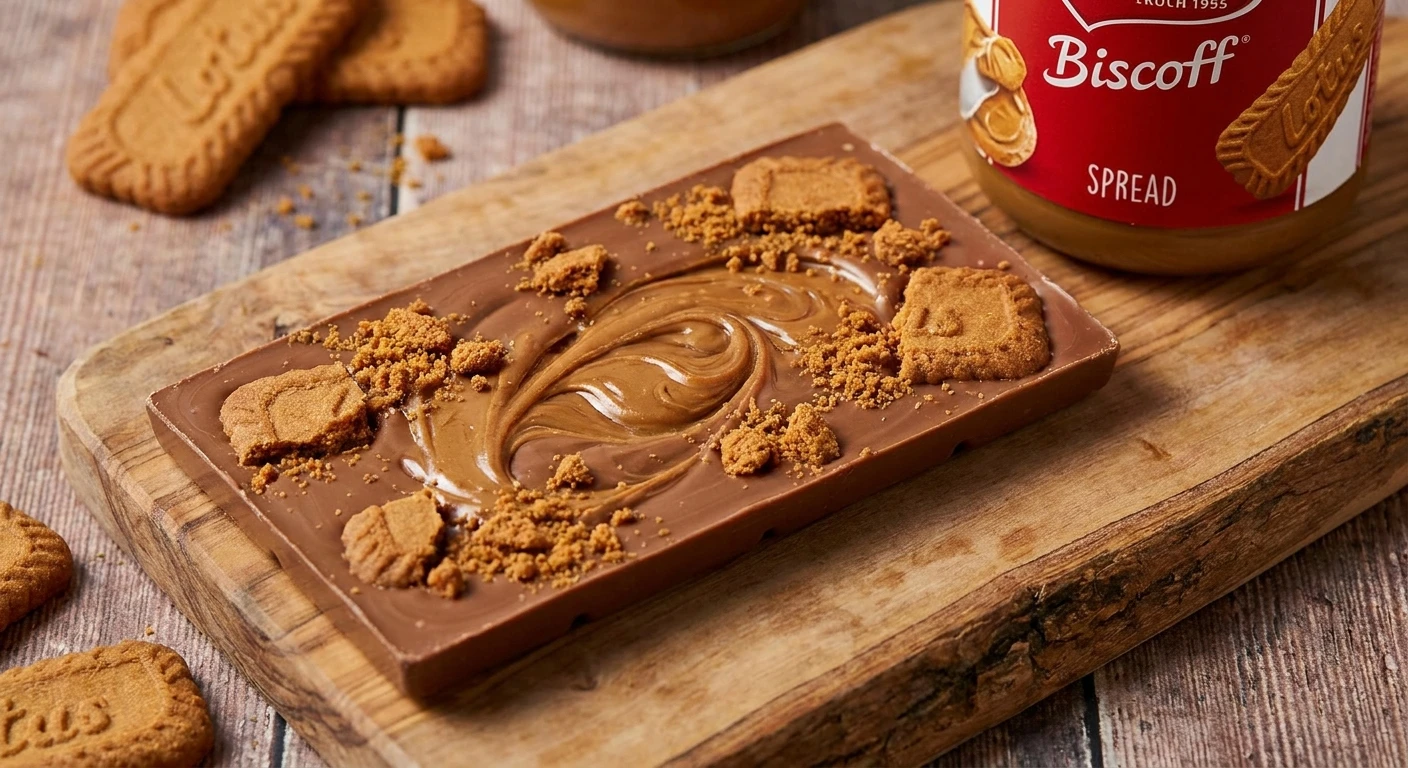
The Unmatched Magic of biscoff chocolate
You absolutely have to try biscoff chocolate if you want to experience the ultimate cozy dessert upgrade. Let me take you back a little bit to set the scene. I was wandering through the snowy streets of Kyiv late last winter, and I ducked into this tiny, aesthetic specialty coffee shop to escape the biting cold wind. The barista, knowing I have an aggressive sweet tooth, slid a small, unassuming plate across the counter. On it was a chunky, artisan-crafted square of this glorious stuff. One bite, and I was entirely obsessed. The rich, velvety snap of premium cocoa perfectly balanced the deep, cinnamon-spiced caramel crunch of the biscuit spread. It was magic on a plate.
Now that we are navigating through 2026, the dessert landscape has shifted dramatically. People are no longer satisfied with standard, one-note sweets. We want texture, we want nostalgia, and we want bold flavor profiles that hit every single taste bud. That is exactly what this combination delivers. Whether you are baking for a weekend dinner party or just hoarding snacks for a movie marathon on your couch, understanding how to utilize this ingredient will completely upgrade your kitchen game. Trust me, once you introduce this caramelized masterpiece into your routine, plain old milk chocolate bars just won’t cut it anymore.
Why You Absolutely Need This in Your Pantry
Let’s talk about why this specific blend is completely taking over our kitchens. When you merge high-quality cocoa with spiced biscuit butter, you get a hybrid ingredient that functions as a secret weapon. The texture is complex—you get the immediate rich melt of cocoa butter followed instantly by the slight, satisfying grit of caramelized sugar and crushed biscuits. It provides an immediate value proposition to your cooking: you can take a basic, cheap recipe and make it taste like it came straight out of a high-end European bakery.
Think about the sheer versatility here. For example, if you melt a standard bar of this over some fresh strawberries, you suddenly have a gourmet dessert that took three minutes to make. Or, imagine chopping a block into rough chunks and folding them into your standard chocolate chip cookie dough. The pockets of melted biscuit butter create these glorious, gooey centers that elevate the entire batch.
Comparison: The Ultimate Taste Test
| Feature | Standard Milk Chocolate | Spiced Biscuit Chocolate |
|---|---|---|
| Texture | Smooth, uniform, melts quickly on the tongue | Crunchy, buttery, multi-layered complex melt |
| Flavor Profile | Sweet, standard cocoa, heavy dairy notes | Deep caramel, cinnamon, nutmeg, rich cocoa |
| Best Application | Quick snacking, basic baking | Gourmet melting, stuffed pastries, premium snacking |
To really get the most out of it, you need to know how to pair it. Here are my top three favorite ways to match this treat with other flavors:
- Robust Dark Coffee: The bitterness of a strong espresso cuts right through the sweet caramel notes, creating a perfect balance on your palate.
- Tart Berries: Raspberries and blackberries provide a sharp acidity that contrasts beautifully with the heavy, buttery sweetness of the biscuit spread.
- Aged Cheeses: Trust me on this one. A slice of sharp cheddar or aged gouda paired with a chunk of spiced chocolate is a mind-blowing savory-sweet combination.
Origins of Speculoos
To truly appreciate what we are eating, we have to look back at where it all started. Long before it was blended into our favorite confectioneries, it began as a simple, humble biscuit known as Speculoos in Belgium. These heavily spiced, crunchy cookies were traditionally baked exclusively for St. Nicholas Day in December. Bakers would press the dough into beautifully carved wooden molds, creating intricate shapes. The flavor profile was defined by a highly specific blend of spices—cinnamon, nutmeg, cloves, ginger, and sometimes a hint of white pepper. It was the taste of European winters, deeply comforting and instantly recognizable.
The Evolution of Cookie Butter
Fast forward a few decades, and a brilliant culinary shift happened. A resourceful Belgian woman competing on a television show had the genius idea to crush these iconic biscuits, blend them with oils and sugar, and create a spreadable paste. The world went completely crazy for it. Suddenly, you didn’t need to crunch into a dry biscuit; you could slather that exact same caramelized, spiced flavor onto toast, pancakes, and waffles. It was a massive leap forward in the dessert industry. The spread maintained the iconic caramelized sugar flavor but introduced a smooth, velvety texture that made it incredibly versatile for cooking and baking.
The Modern State of Cookie-Infused Sweets
By the time we hit the current era of 2026, culinary boundaries have completely blurred. Chocolatiers realized that combining the smooth snap of tempered cocoa butter with the dense, flavorful paste of cookie butter created an unparalleled hybrid. We now see artisan makers creating massive, stuffed bars where the biscuit paste flows out like liquid gold when you break them. We see truffles, hot cocoa bombs, and intricate pastry fillings completely built around this flavor combination. It has moved from a seasonal European treat to a globally recognized flavor profile that demands respect.
The Maillard Reaction Explained
Let’s get a little bit nerdy for a second and talk about the science of why this tastes so incredible. The secret lies heavily in the Maillard reaction. When the original biscuits are baked, the amino acids and reducing sugars react under heat. This is not just simple caramelization; it is a complex chemical process that creates hundreds of different flavor compounds. When you bite into this specific chocolate, your brain is registering those deeply browned, roasted notes. Those compounds are trapped within the fat of the spread, and when the spread is encased in cocoa butter, the flavors are preserved and concentrated, hitting your palate all at once as it melts.
Emulsification in Confectionery
The other major scientific factor is emulsification. Combining a biscuit paste (which contains vegetable oils, flour, and sugar) with pure chocolate (which contains cocoa solids and cocoa butter) is actually quite tricky. If the fat structures don’t align, the mixture will separate or become grainy. Master confectioners have to perfectly temper the mixture, controlling the crystallization of the cocoa butter so that it forms a stable, snappy structure that can safely hold the softer fats of the biscuit spread without blooming (those weird white streaks you sometimes see on old candy).
- Melting Point Dynamics: Cocoa butter melts at exactly human body temperature (around 98.6°F or 37°C), which is why the outer shell snaps and then instantly liquefies in your mouth.
- Fat Content Ratios: The vegetable oils in the biscuit spread lower the overall melting point of the filling, ensuring the center stays softer than the outer shell.
- Moisture Control: True biscuit spreads have practically zero water content, which is crucial because even a drop of water can cause melted cocoa to seize and become a hard, unworkable mess.
Day 1: The Ultimate Breakfast Toast
Let’s kick off an amazing seven-day menu to integrate this glorious ingredient into your daily routine. On day one, keep it simple but luxurious. Take a thick slice of brioche bread and toast it in a pan with a little bit of salted butter. While it is still piping hot, grate a generous amount of your spiced chocolate right over the top. The residual heat will melt the shavings into a gooey, sweet glaze. Top it with a pinch of flaky sea salt. It takes two minutes but tastes like a twenty-dollar brunch plate.
Day 2: Spiced Morning Latte
For your second day, upgrade your morning caffeine fix. Froth your milk (oat milk works incredibly well for this) until it is hot and foamy. Drop a heavy square of the chocolate right into the bottom of your mug, and pull a double shot of hot espresso directly over it. The boiling coffee will instantly melt the block. Stir vigorously to create a rich, velvety mocha, then pour your frothed milk over the top. The cinnamon notes blend perfectly with the coffee beans.
Day 3: Decadent Overnight Oats
Day three is all about prep. Mix your rolled oats with chia seeds, almond milk, and a tiny dash of vanilla extract. Before you put it in the fridge to set overnight, chop up a handful of the chocolate into rough chunks and fold them into the mixture. As the oats sit, the chocolate chunks soften slightly. When you wake up, you will have a creamy, spiced, incredibly satisfying breakfast waiting for you without any morning effort.
Day 4: Gourmet Stuffed Cookies
Time to get into some baking. Whip up your favorite standard chocolate chip cookie dough, but we are going to change the game. Flatten a spoonful of dough in your palm, place a solid cube of the spiced chocolate right in the center, and wrap the dough completely around it so it is sealed. Bake as usual. When you pull them out of the oven and break them in half, the center will literally ooze with warm, melted cookie butter and cocoa.
Day 5: Next-Level Fudgy Brownies
For day five, we are upgrading the classic brownie box mix. Follow the instructions on the box, but right before you pour the batter into the baking pan, melt down half a cup of the spiced chocolate in the microwave. Drizzle the melted goodness all over the top of the batter in the pan, and take a butter knife to swirl it around, creating thick ribbons of caramel-spiced flavor throughout the pan. Bake it, let it cool, and prepare to be amazed.
Day 6: Magic Shell Ice Cream Topping
This is probably the most fun step in the whole week. Take a bowl of high-quality vanilla bean ice cream. In a small microwave-safe dish, melt your specialized chocolate with just a tiny teaspoon of coconut oil. Stir until it is incredibly smooth, and immediately pour it over the cold ice cream. The coconut oil forces the chocolate to harden instantly upon contact with the cold surface, creating a thick, crunchy shell that you have to crack with your spoon.
Day 7: Cozy Weekend Fondue
Cap off the week with an interactive dessert. Set up a simple fondue pot or a double boiler on the stove. Melt down a massive amount of the spiced chocolate until it is bubbling and fluid. Arrange a huge platter of dipping items: fresh strawberries, sliced bananas, giant fluffy marshmallows, pretzel sticks, and even plain biscuits. Gather your friends around and just go crazy dipping everything in sight. It is the perfect cozy weekend activity.
Myth: It is literally just crushed cookies mixed into normal bars
Reality: Not even close. While the flavor is inspired by the cookies, the process involves creating an ultra-smooth emulsion of spiced caramelized sugar, vegetable fats, and pure cocoa butter. The result is an entirely new texture profile that behaves much differently than simply tossing crumbs into a mold.
Myth: It is way too aggressively sweet to bake with
Reality: It actually balances beautifully when used correctly. Because the primary flavor notes are deep caramel and warm spices like cinnamon and nutmeg, it adds complexity rather than just pure sugar. If you pair it with dark cocoa or slightly salty doughs, it balances out perfectly.
Myth: You cannot temper or mold it at home
Reality: You absolutely can. While the added fats from the biscuit paste make it slightly softer, you can still easily melt and reshape it at home. You just need to be mindful of keeping the temperatures low and avoiding any contact with water so the fats do not seize up.
Is biscoff chocolate vegan?
It depends heavily on the brand. The original biscuit spread is naturally vegan, but when combined with chocolate, many brands use a milk-based cocoa shell. You have to look specifically for dark chocolate or certified dairy-free versions if you need a strictly vegan option.
Does it contain actual whole cookies inside?
Usually, no. The flavor comes from a smooth paste made from the biscuits, though some artisanal brands might sprinkle cookie crumbs on top for extra visual appeal and crunch.
How long does it last in the pantry?
If kept in a cool, dry place away from direct sunlight, it will easily last for six to eight months. However, because of the vegetable oils in the biscuit spread, it can spoil faster than pure, solid cocoa bars.
Can I melt it down for fruit dipping?
Absolutely. It melts beautifully, though it might be slightly thicker than standard baking chips. Adding a tiny drop of coconut oil can help thin it out for perfect dipping consistency.
What specific spices are typically inside?
The signature flavor profile relies heavily on cinnamon, complemented by smaller dashes of nutmeg, cloves, ginger, and occasionally a tiny hint of white pepper or cardamom depending on the recipe.
Is this ingredient gluten-free?
No, standard versions are absolutely not gluten-free. The core ingredient relies on wheat flour-based biscuits. You would need to seek out a specialized brand that uses gluten-free cookie alternatives.
Can I substitute white chocolate instead of milk or dark?
Yes, and it is incredible. White chocolate has a heavy vanilla and dairy profile that pairs flawlessly with the spicy caramel notes, creating something that tastes very similar to a spiced latte.
Where can I actually buy this?
Most major grocery stores carry mass-market versions in their candy aisles now, but for the really good, thick, artisan-stuffed bars, you should check out local specialty confectioners or order online from European importers.
Wrap Up and Get Baking
There you have it—your complete, ultimate manual for mastering this incredible ingredient. From its rich history in European bakeries to the pure science of why it tastes so good on your palate, you are now fully equipped to conquer your kitchen. Do not let another weekend go by eating boring desserts. Grab a few bars, try out the seven-day plan, and completely revolutionize your sweet tooth. Share your epic baking creations with us below, and let us know which pairing blew your mind the most!