
The Enduring Enigma of the Blue Mountains Panther
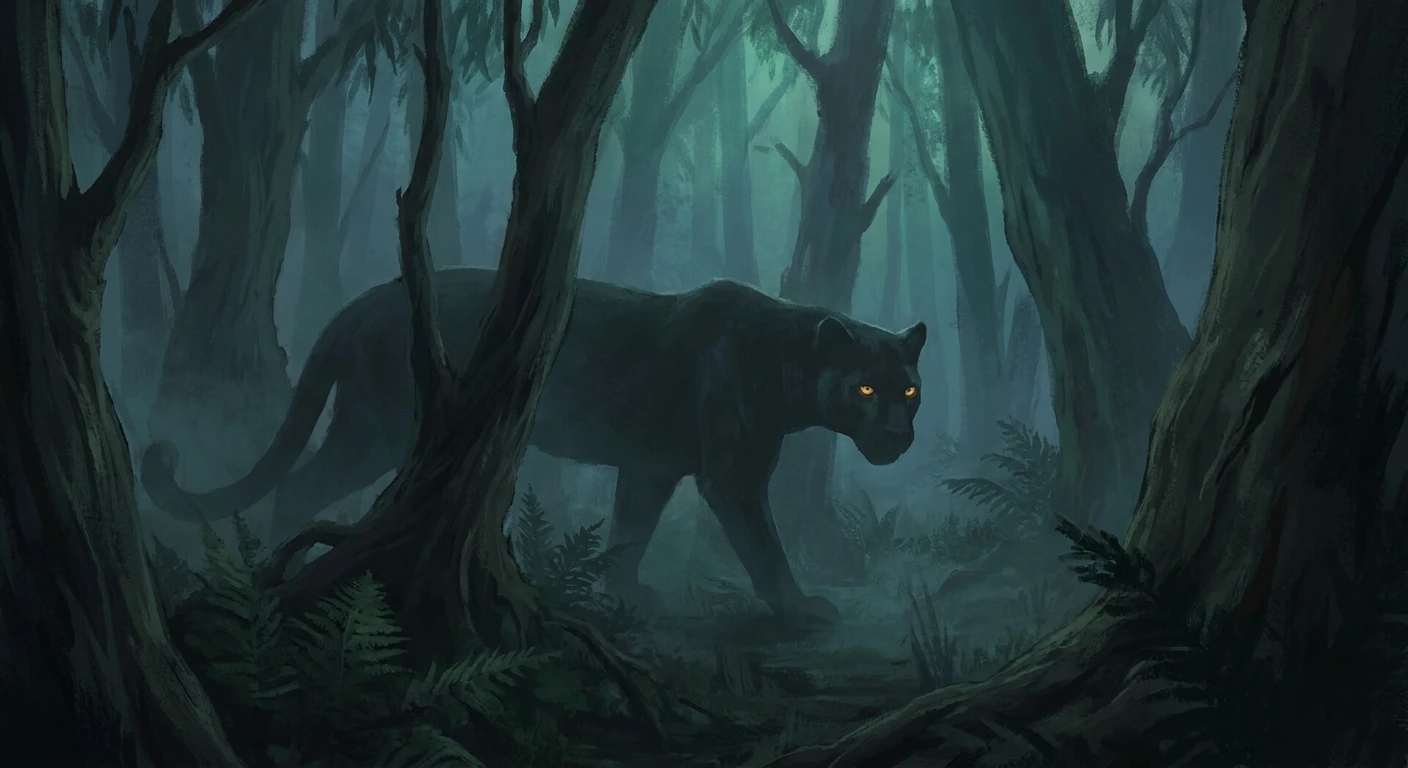
Have you ever wondered if the Blue Mountains Panther is just a tall tale or a genuine, flesh-and-blood predator lurking in the Australian bush? You are not alone. The legend of the Blue Mountains Panther has captivated locals and researchers alike for decades, creating an incredible blend of folklore, genuine fear, and intense scientific debate. People living in the western outskirts of Sydney, particularly around the Hawkesbury and Lithgow regions, have continually reported seeing a massive, black, feline creature darting through the dense eucalyptus forests. But what is the actual truth behind these persistent claims?
This phenomenon goes far beyond simple campfire ghost stories. It impacts how residents view their natural surroundings, alters how farmers manage their livestock, and highlights the incredible psychological power of an enduring myth. By breaking down the historical timeline, the biological plausibility of a big cat surviving in New South Wales, and the scientific tools used to track elusive wildlife, you get a much clearer picture of what might actually be prowling the wilderness. We are going to break down exactly how researchers tackle these claims, the physical evidence left behind, and the myths that constantly cloud our judgment when discussing this legendary creature.
Read also: Who is danica mason? Her Incredible Digital Wellness Rise; The Unsolved Case of zac barnes; The Honest Truth About Epstein and Trump Explained.
To fully grasp the impact of the Blue Mountains Panther, you have to look at the tangible claims and how they affect the local ecosystem and the agricultural community. Farmers and rural property owners frequently report highly unusual livestock injuries, attributing them to a predator far larger and more powerful than a standard dingo or a pack of wild dogs. The value of investigating these claims lies in identifying true ecological threats to the region. Whether these attacks are the work of genuine big cats or simply oversized feral pests, identifying the culprit is crucial for local agriculture.
Two prominent examples of these incidents highlight why the legend persists. First, the infamous Grose Vale attacks saw numerous sheep found with distinct, wide-set puncture wounds matching the bite radius of a large feline. Second, the Lithgow highway sightings involve multiple independent motorists reporting a massive, muscular black creature crossing the road illuminated by headlights. These examples keep the legend alive and force wildlife authorities to take notice. To make sense of the chaos, investigators categorize the evidence based on its reliability. Here is a breakdown of what trackers usually find in the field:
| Evidence Type | Description | Reliability Level |
|---|---|---|
| Visual Sightings | Eyewitness accounts of a large black feline, usually at dawn or dusk in low light. | Low (Highly prone to optical illusion and misidentification) |
| Livestock Depredation | Carcasses with distinct canine puncture wounds, crushed skulls, and feline feeding patterns. | Medium (Often matches wild dogs, but sometimes anomalies exist) |
| Plaster Track Casts | Footprints lacking claw marks, which is typical of retractable feline claws. | High (If preserved correctly before weather erosion) |
When professionals go into the field to investigate claims of the Blue Mountains Panther, they rely on a strict, methodical protocol. You cannot just wander into the rugged bush hoping to spot a ghost. Here is the core methodology used to evaluate a potential big cat habitat:
- Deploying remote sensor technology: Strategically placing motion-activated, infrared trail cameras along natural game trails, ridge lines, and hidden water sources.
- Conducting forensic analysis: Swabbing fresh kill sites for saliva to extract predator DNA, and collecting hair snagged on barbed wire fences.
- Mapping territorial markers: Identifying deep tree scratches at heights that exceed the physical reach of native predators or average feral domestic cats.
Origins of the Legend
Where did the idea of the Blue Mountains Panther actually come from? The rumors trace back long before the internet age. One of the most prominent origin theories dates back to the mid-20th century. During World War II, United States military personnel were stationed across Australia, and some units reportedly brought over exotic animals, including pumas or black panthers, to serve as unit mascots. As military regulations tightened or units were suddenly relocated, local lore suggests these animals were quietly released into the vast, unforgiving Australian bush. Another popular origin theory involves traveling circuses and unregulated private zoos common in the late 19th and early 20th centuries. Vehicle accidents during transport or deliberate releases by bankrupt circus owners could easily have introduced a handful of large felines into an environment teeming with marsupial prey and completely lacking native apex predators of a similar size.
Evolution of Sightings
Through the 1980s and 1990s, whispers of a large black cat evolved into a massive, widespread cultural phenomenon. Rural farmers initially shared stories over fences about massive, dog-like creatures with long, sweeping tails that moved with absolute silence. Soon, the mainstream media picked up on these localized events. Newspapers officially dubbed the creature the Blue Mountains Panther, and the frequency of public sightings spiked dramatically. It quickly became a self-fulfilling cycle; intense media coverage prompted more people to actively look for the animal, leading to more reported sightings. Blurry photographs and grainy VHS footage became staple features on evening news broadcasts across Sydney, forever cementing the animal’s place in modern Australian folklore alongside the Yowie.
Modern State of the Investigation
Today, the situation remains a highly contentious mix of skepticism, government denial, and dedicated amateur research. In the early 2000s, the New South Wales state government actually commissioned official reports, such as the 2003 inquiry, to determine if a breeding population of big cats existed and posed a threat to agriculture. The official conclusion stated there was no conclusive, undeniable proof of the Blue Mountains Panther, largely attributing the livestock damage to wild dogs, dingoes, or unusually large feral cats. However, independent tracking groups completely reject this finding. They continue to actively compile extensive databases of footprints, scat, and eyewitness reports, maintaining that a small, highly elusive, localized population of melanistic leopards or pumas still roams the dense escarpments to this day.
DNA and Scat Analysis
To truly understand the reality of the Blue Mountains Panther, you need to look at the rigorous scientific methods used to test physical evidence. When a suspected big cat leaves behind scat (feces) or saliva on a fresh carcass, researchers turn to molecular biology. The primary tool here is Polymerase Chain Reaction, or PCR. PCR amplifies tiny, heavily degraded traces of DNA so scientists can sequence the genetic markers accurately. If the Blue Mountains Panther is a genuine big cat, a successful PCR test on environmental DNA (eDNA) would instantly reveal its exact species. However, the vast majority of laboratory results return sequences matching Felis catus (the standard domestic or feral cat), Canis lupus dingo (dingoes), or introduced red foxes. You also have to factor in the ecological carrying capacity of the environment, which dictates exactly how many apex predators a specific geographical area can sustain based on available prey like kangaroos, wallabies, and possums.
Feline Biomechanics and Ecology
Another major piece of the scientific puzzle lies in biomechanics and genetic traits. The term “panther” is not actually a distinct, recognized species in taxonomy. It is simply a colloquial term for any large cat exhibiting a specific genetic mutation. Here are the core scientific facts regarding these biological mechanisms:
- Melanism genetics: The black coat of a so-called panther is caused by an excess of melanin. In leopards, this is a recessive allele, while in jaguars, it is a dominant allele. It provides excellent camouflage in dense, dark forests.
- Foraging ecology: A true big cat requires a massive, consistent caloric intake, meaning a breeding population would leave a highly visible trail of large, partially consumed carcasses often cached high in trees to avoid scavengers.
- Footprint morphology: Feline tracks are easily distinguishable from canines because felines possess retractable claws. This means a true big cat print will almost never show claw marks in the soil, unlike a dog or dingo print.
- Lifespan constraints: A leopard in the wild lives roughly 12 to 15 years. For the sightings to persist from the 1940s to today, an active, reproducing population must exist, not just a single escaped individual.
If you find yourself fascinated by the Blue Mountains Panther and want to know exactly how field researchers document potential cryptid claims, you need a systematic, logical approach. Here is a step-by-step framework used by amateur trackers and professional wildlife biologists when a brand new sighting is reported.
Step 1: Documenting Initial Sighting Details
The very first move is recording the exact time, weather conditions, and precise GPS coordinates of the encounter. Human memory degrades incredibly quickly under stress, so getting the eyewitness to sketch the animal’s size relative to nearby landmarks—like a specific fence post or bush—is crucial for establishing accurate physical scale.
Step 2: Securing the Perimeter
Treat the area exactly like a fragile forensic data zone. You must immediately cordon off the site where the Blue Mountains Panther was allegedly seen to prevent curious hikers, vehicles, or local dogs from trampling potential footprints or disturbing hair snagged on lower branches.
Step 3: Casting Animal Tracks
If you locate a clear, undisturbed footprint in mud or soft sand, use dental stone or high-grade plaster of Paris to create a permanent three-dimensional cast. This preserves the track’s morphology, allowing biomechanics experts to look for the distinct absence of claw marks indicating a feline species.
Step 4: Collecting Biological Samples
Wearing sterile surgical gloves, meticulously gather any scat, hair follicles, or wet saliva left on a potential prey animal. Place these delicate samples in breathable paper bags to prevent rapid mold growth, which quickly destroys the fragile DNA needed for laboratory PCR testing.
Step 5: Setting Up Motion-Activated Cameras
Deploy infrared trail cameras in a strategic grid pattern around the sighting location. Focus your lenses on natural choke points, game trails, and hidden water sources where a large, secretive predator is naturally forced to travel to survive.
Step 6: Interviewing Local Residents
Canvass the surrounding rural properties thoroughly. You often find that neighbors have heard unusual, guttural vocalizations at night or lost poultry recently, which heavily helps establish a broader territorial range for the suspected animal.
Step 7: Submitting Evidence for Expert Review
Send the collected field data, plaster casts, and genetic samples to a university zoology department or a certified genetics lab. Objective, third-party scientific analysis is the only way to separate the Blue Mountains Panther from an ordinary, albeit large, feral cat.
Let us cut through the noise and directly address the most persistent misconceptions surrounding this legendary creature.
Myth: The Blue Mountains Panther is an undiscovered, native marsupial predator.
Reality: Australia’s largest native mammalian predator in modern history was the thylacine (Tasmanian tiger), which did not resemble a large black cat. If the panther truly exists, it is undoubtedly an introduced placental mammal from another continent.
Myth: The government captured one in secret and hid the evidence to protect the local tourism industry.
Reality: Multiple state government inquiries found zero concrete evidence. There is no grand conspiracy; authorities rely entirely on hard data, which simply remains elusive and unproven.
Myth: It is impossible to confuse a normal feral cat with a massive panther.
Reality: Without a clear frame of reference, optical illusions in the dense bush are incredibly common. A large, muscular feral cat viewed from a distance against scrubland can easily appear to be the size of a leopard due to forced perspective.
Myth: All black big cats are a single species officially called “panthers.”
Reality: “Panther” simply refers to melanistic variants of leopards or jaguars, not a unique, standalone biological species on its own.
What exactly is the Blue Mountains Panther?
It is a famous cryptid or unverified large black feline reported to live in the rugged bushland west of Sydney, Australia.
Are there black panthers native to Australia?
No. Australia has no native big cats whatsoever; all native mammalian predators are marsupials or the introduced dingo.
When was the first sighting recorded?
Rumors and sparse newspaper reports date back to the late 1800s, but they spiked significantly after World War II.
Has anyone ever photographed the panther?
Many blurry, inconclusive photographs exist, but none provide definitive, high-resolution proof of a genuine big cat.
Did the government investigate the sightings?
Yes. The New South Wales government conducted official agricultural inquiries in the early 2000s but found no conclusive evidence.
Could the sightings just be large feral cats?
Absolutely. Feral cats in Australia can grow exceptionally large due to abundant prey and are the most statistically likely culprits.
What should I do if I see a big cat?
Keep your distance for safety, try to take a clear, stabilized video with a size reference in the frame, and report it to local wildlife authorities.
The legend of the Blue Mountains Panther continues to captivate the public imagination, serving as a powerful reminder of how much of our natural world still feels mysterious. Whether it is a forgotten relic of military history, an escaped circus attraction, or a simple trick of the light in the dense eucalyptus forests, the mystery remains entirely fascinating. The pursuit of the truth teaches us valuable lessons about wildlife tracking, ecology, and the limits of human perception. Leave a comment below with your thoughts, share your own local legends, and always stay curious about the wild, untamed world around you!