The Untold Story of GTA 6 Voice Actors
When the world caught its first glimpse of the sun-drenched, neon-lit skyline of Leonida, the immediate conversation wasn’t just about the massive map or the upgraded physics engine. Fans immediately started asking: who exactly are the GTA 6 voice actors bringing protagonists Jason and Lucia to life? The casting of a major open-world game is arguably the most critical component of its development. Without a compelling, believable performance driving the narrative, even the most beautifully rendered digital cities feel entirely hollow.
Rockstar Games operates under a legendary shroud of secrecy, utilizing airtight non-disclosure agreements to protect their ongoing projects. A sandbox game of this magnitude requires tens of thousands of lines of dialogue, subtle emotional shifts, and incredibly complex motion capture performances. We are looking at a monumental era of digital characters interacting, breathing, and speaking with unprecedented realism. Understanding the rigorous casting choices gives us unparalleled insight into the narrative direction of the franchise.
Read also: How to Build a black and gold brand; Who is danica mason? Her Incredible Digital Wellness Rise; Understanding the Latest Ponga Injury and Recovery.
By intentionally shifting away from high-profile Hollywood celebrities, the studio ensures that players see the character first, not the famous person behind the microphone. This distinct approach guarantees an authentic connection to the gritty, satirical atmosphere of the game. The commitment to finding raw, exceptional talent means that the individuals stepping into the recording booth are about to experience a career trajectory unlike anything else in the entire entertainment industry. The stakes have literally never been higher for these performers.
Core Strategies Behind Modern Game Casting
The selection of the GTA 6 voice actors dictates the emotional resonance and pacing of the entire campaign. A stellar performance elevates a standard script into a bona fide cultural touchstone. The true value of a dedicated, relatively unknown voice actor lies in their total malleability. When players load up the game, they don’t carry preconceived notions about the actor’s real-world persona. They simply see Jason and Lucia, raw and unfiltered. This allows for absolute immersion.
Here is a breakdown of how different casting choices impact game development:
| Actor Classification | Player Immersion Level | Studio Budget & Schedule Impact |
|---|---|---|
| Unknown / Breakout Talent | Extremely High (No real-world bias) | Resource Efficient, High Availability |
| Hollywood A-List Celebrity | Moderate to Low (Distracting recognition) | Highly Expensive, Rigid Schedules |
| Niche Industry Veteran | High (Familiar but adaptable) | Moderate Budget, Professional Pace |
To fully grasp why this specific strategy is so crucial, you have to look at the logistical demands of a massive interactive project. Here are the primary reasons why this casting methodology reigns supreme:
- Unbroken Immersion: You hear the authentic voices of the protagonists, rather than visualizing a blockbuster movie star promoting their latest summer film.
- Long-term Commitment: Recording a massive sandbox title takes several years of dedicated studio time, which breakout actors can readily accommodate without conflicting movie shoots.
- Motion Capture Synergy: Modern performances require aggressive full-body acting, meaning the talent must physically match the grueling, athletic demands of the digital skeleton.
The methodology is a masterclass in creative resource allocation. Studios prioritize their budget on writing, proprietary technology, and expansive world-building, while sourcing hungry, brilliant performers who are willing to give years of their lives to a single masterpiece. Casting directors sift through thousands of blind auditions, searching for the exact vocal timbre that fits a modern dynamic. It is a grueling, exhausting process, but the payoff is a virtual state that feels terrifyingly real, populated by characters who sound like actual human beings rather than stylized caricatures.
Origins of the Casting Strategy
Back in the early days of 3D gaming, publishers heavily relied on pure celebrity star power to legitimize their releases to the mainstream media. Early 2000s titles famously featured legendary actors like Ray Liotta, Burt Reynolds, Samuel L. Jackson, and Dennis Hopper. While these massive names looked incredible printed on the back of a physical game box, the sheer logistics of working with high-profile film stars proved incredibly frustrating. Massive egos, severe scheduling conflicts, and exorbitant financial demands forced the industry to completely rethink how to cast their most ambitious projects.
The Evolution Toward Unknown Talent
By the late 2000s, the paradigm had completely shifted. Developers discovered that utilizing lesser-known, highly trained theater and character actors resulted in a much smoother, drama-free production pipeline. Performers brought their protagonists to life with a grounded, believable intensity that a standard A-lister, recording lines in a rush between movie sets, might have completely missed. This evolution allowed game writers to craft exponentially longer, more complex, and branching narratives because the actors were available for extensive, multi-year recording contracts without demanding outrageous daily rates.
The Modern State of Interactive Performance
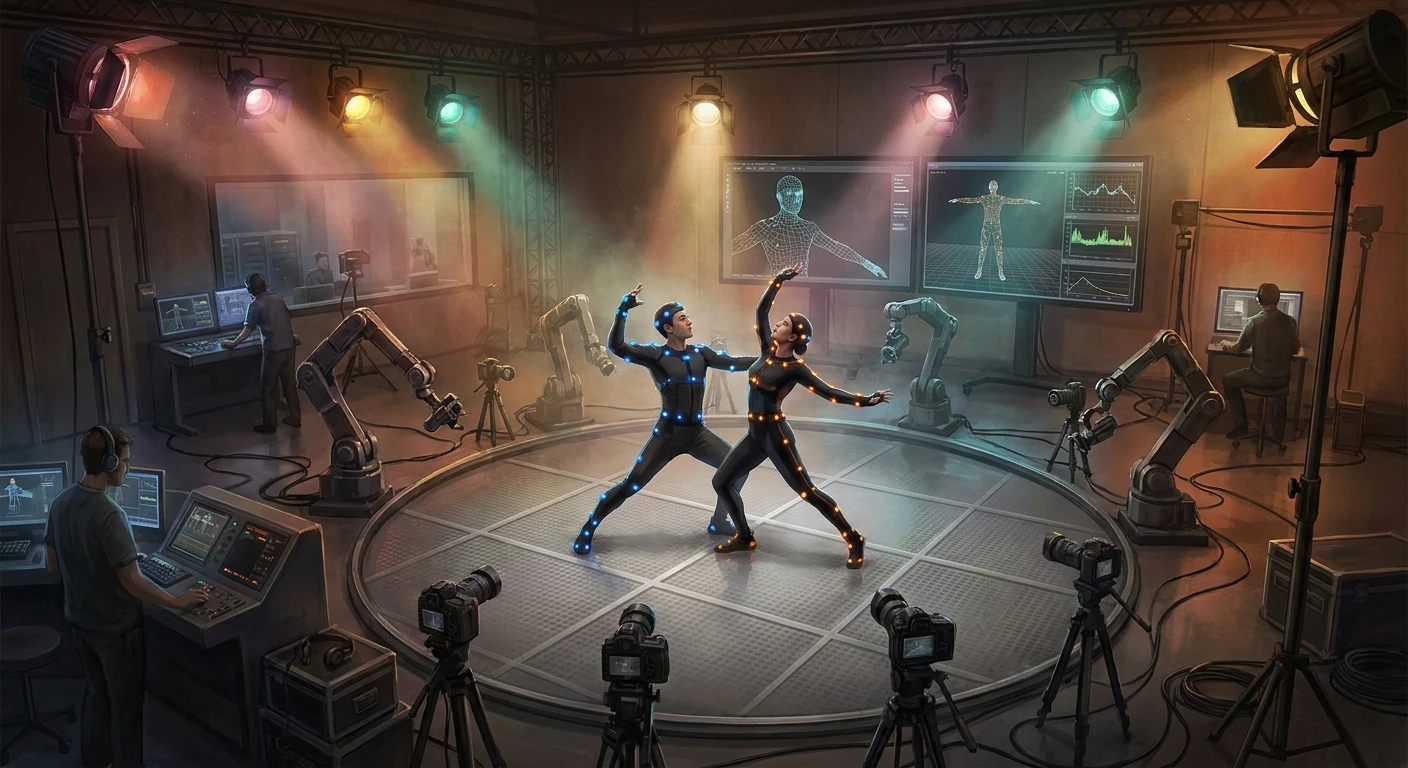
Today, the entertainment landscape is almost unrecognizable from those early sessions. The GTA 6 voice actors are stepping into an era where the term “voice acting” is actually a massive misnomer. They are, in fact, full-fledged performance capture artists. They spend their days wearing skin-tight suits covered in reflective ping-pong balls, with intense facial cameras recording every microscopic twitch of an eyebrow or purse of the lips. The modern state of the industry demands robust, hybrid performers who can seamlessly handle intense physical stunt choreography while delivering deeply emotional dialogue without missing a beat.
The Mechanics of Performance Capture
When discussing the monumental performances in the latest generation of open-world titles, we absolutely have to look at the technology driving the capture volume. A “volume” is the specialized, high-tech soundstage where the actors perform. It is typically lined with hundreds of high-speed infrared cameras mounted on heavy steel scaffolding. These cameras precisely track the reflective markers on the actors’ suits, instantly translating physical movement into a digital skeleton. The GTA 6 voice actors aren’t just standing comfortably in a padded, soundproof booth reading from a stationary music stand; they are physically acting out high-speed car chases, tense bank heists, and quiet, vulnerable moments of heartbreak.
Facial Rigging and Micro-Expressions
The true magic of modern character believability happens with advanced facial rigging. A specialized head-mounted camera captures the actor’s face in extreme close-up, feeding massive amounts of data into proprietary software that maps tiny muscle movements directly to a highly detailed 3D character model. This requires highly specialized scientific systems to work flawlessly.
- FACS (Facial Action Coding System): A strict, scientific categorization of human facial movements based on underlying musculature, allowing animators to mathematically map emotions.
- HMC (Head-Mounted Camera): A lightweight, carbon-fiber rig worn by the actor to capture uninterrupted, high-definition facial data regardless of how violently their body moves during a scene.
- Real-time Retargeting: The sophisticated software process that instantly applies a human actor’s unique proportions to a digital avatar, allowing the director to see the final rendered character on a monitor while shooting on the bare stage.
Instead of an animator manually drawing a smirk frame-by-frame, the software translates the actor’s genuine, physical smirk directly onto the digital model. This astronomical technical leap is precisely why modern virtual characters feel so tangibly alive.
Step 1: Master Traditional Theater Acting
Before ever touching a dense video game script, aspiring performers must thoroughly understand spatial awareness, stage projection, and physical presence. Traditional theater experience is universally considered invaluable for full-body acting because performers learn how to convey deep emotion using their entire posture, not just their vocal cords.
Step 2: Develop Extreme Vocal Stamina
Intense recording sessions can easily last up to eight hours a day. Actors must learn how to scream over simulated helicopter noise, grunt from virtual impacts, and project commanding authority without shredding their vocal cords. Strict hydration protocols and proper diaphragm breathing techniques are absolutely essential for career longevity.
Step 3: Understand the Empty Capture Volume
Actors must learn to work effectively inside a massive, blank gray room. There are no real props, no beautifully painted sets, and no real vehicles—just rudimentary wireframes, PVC pipes, and foam blocks. A highly trained imagination is the most critical tool an actor can bring to the volume.
Step 4: Adapt to Branching, Non-Linear Scripts
Unlike a traditional linear movie, an interactive game script branches off into dozens of possibilities. Performers have to record multiple, slightly altered variations of the exact same scene, maintaining perfectly consistent emotional continuity across all potential player outcomes.
Step 5: Embrace the Physical Reality of Spandex
Wearing a tight, unflattering motion capture suit covered in velcro markers can feel ridiculous to the uninitiated. True professionals leave their ego entirely at the door, embracing the strange uniform and fully committing to the physical reality of the suit to deliver a genuine performance.
Step 6: Master Subtle Micro-Expressions
With head-mounted cameras sitting mere inches from their eyes, actors must quickly realize that incredibly subtle eye movements and tiny lip quivers convey significantly more emotion than exaggerated, overly theatrical faces. The camera captures every single thought that crosses their mind.
Step 7: Navigate Iron-Clad Non-Disclosure Agreements
The final, and perhaps most stressful, step is learning absolute professional discretion. You might be working every single day on the biggest, most expensive entertainment product in human history, but you cannot legally tell a single soul—not even your family—until the publisher officially announces the cast.
Myths and Realities of Game Acting
Myth: Voice actors just read off a page in a dark, comfortable booth in their pajamas.
Reality: Modern interactive acting is intensely physical, requiring full motion capture suits, exhausting stunt work, and precise spatial choreography on a massive, highly technical soundstage.
Myth: The most famous Hollywood actors naturally make the best, most engaging game protagonists.
Reality: Unknown actors consistently provide much better immersion. Players don’t constantly associate their voices with pre-existing movie characters, allowing the new game persona to completely shine on its own merits.
Myth: Actors finish all of their required work in a few short weeks.
Reality: Major open-world titles require core actors to remain on call for several years, continuously recording revised dialogue, dynamic world events, and post-launch expansion content.
Myth: Artificial intelligence is completely replacing human performers in the studio.
Reality: While AI is occasionally utilized for generic background chatter or distant crowd noise, actual human actors remain strictly necessary for the emotional depth, chemistry, and irreplaceable nuance of lead characters.
Who are the main characters in the new game?
Lucia and Jason serve as the central protagonists, navigating a massive, modern, fictionalized version of a dangerous, sun-soaked tropical state filled with endless opportunity and risk.
Why does the studio heavily favor unknown talent?
It perfectly preserves the deep immersion of the fictional world and ensures that the actors are readily available for complex, long-term recording contracts without scheduling conflicts.
How long does the recording process actually take?
Major, industry-defining sandbox games typically require a grueling three to five years of intermittent voice recording and intensive physical motion capture.
Do the actors perform their own dangerous stunts?
Basic physical movements, walking, and light action are performed by the core actors, but highly complex, dangerous physical stunts are strictly handled by trained professional stuntmen wearing the exact same mocap suits.
Are the finalized voices heavily processed or changed?
The core performances are largely kept remarkably natural, though brilliant audio engineers meticulously master the tracks to flawlessly fit the specific environmental acoustics of the virtual world.
When is the official cast list usually confirmed?
Historically, full, verified cast lists are only officially published by the studio right around the final launch date, or ultimately hidden within the final credit roll of the game itself.
Can actors safely leak their involvement online?
Absolutely not. Strict, legally binding non-disclosure agreements severely prevent any public acknowledgement, teasing, or confirmation before official, verified studio authorization is granted.
The intense anticipation surrounding the GTA 6 voice actors brilliantly highlights our deep, cultural connection to interactive storytelling. These dedicated performers sacrifice years of their lives to shaping digital personas, ensuring our virtual adventures feel remarkably profound, emotional, and undeniably real. The sheer amount of invisible labor required to make a digital human breathe is staggering. Share this deep dive with your gaming friends, and sound off in the comments below with what specific kind of emotional performances you hope to see in the next massive generation of gaming!