
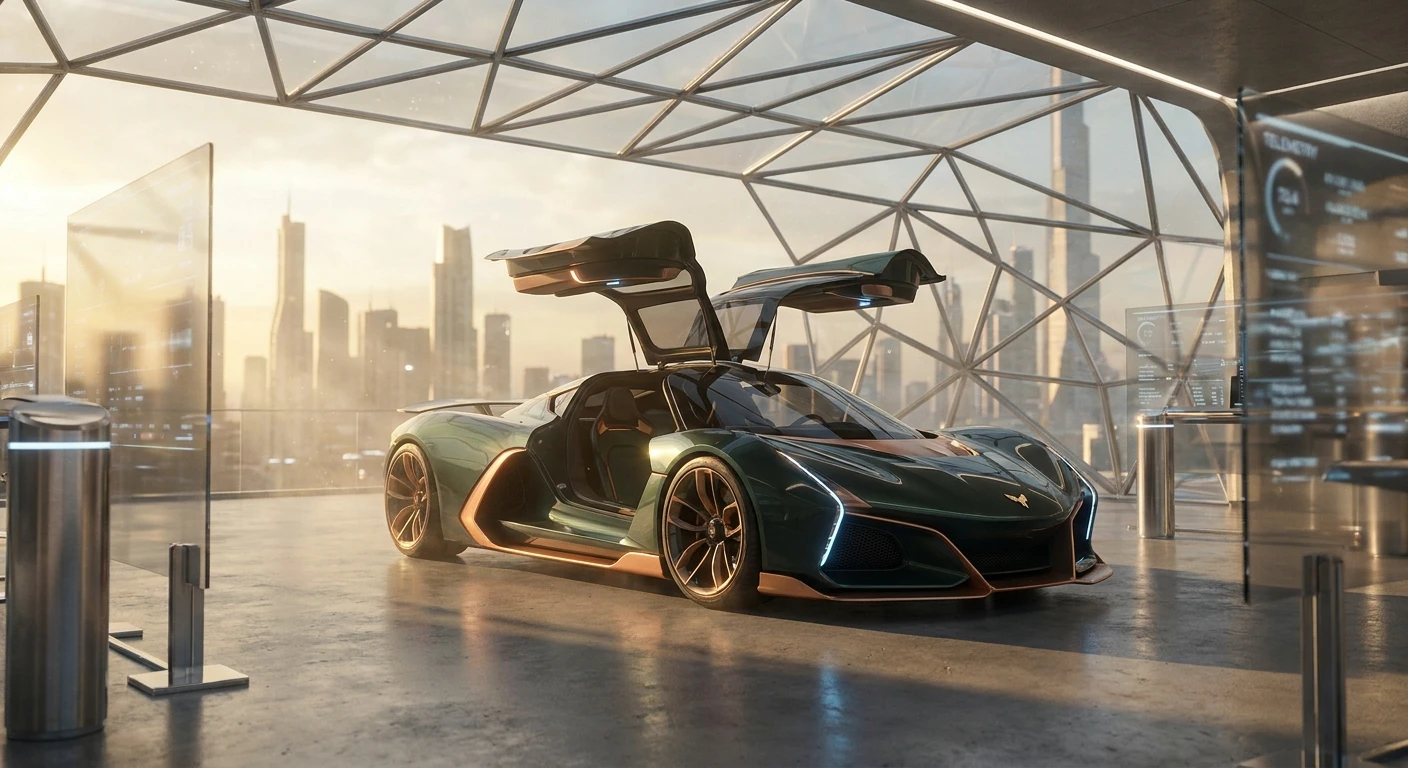
Understanding the Aston Martin Valhalla Price and Value
When you hear whispers about the Aston Martin Valhalla price, you immediately know you are stepping into a rare realm where extreme automotive engineering meets pure, uncompromising art. Securing a vehicle of this magnitude is not just a simple transaction; it represents acquiring a piece of rolling history that blends Formula 1 technology with street-legal luxury. The expected financial commitment sits firmly in the hypercar bracket, generally estimated at around $800,000 to $1,000,000 base, before any bespoke customization touches the carbon fiber. You are paying for more than just raw speed. You are investing in a highly limited production run, cutting-edge hybrid powertrain architecture, and an aerodynamic profile sculpted by wind tunnels normally reserved for motorsport prototypes. If you want a standard daily commuter, you look elsewhere. But if you demand a masterpiece that redefines road-going performance, the conversation starts here. The financial entry point guarantees absolute exclusivity, ensuring that seeing another one at your local luxury car club remains an incredibly rare event. Every single dollar accounts for obsessive attention to detail, from the exact weaving of the carbon tub to the precise acoustic tuning of the exhaust.
The Core Benefits Behind the Multi-Million Dollar Investment
You might wonder exactly what justifies spending nearly a million dollars on a machine with four wheels. The answer lies in the uncompromising philosophy behind its creation. This vehicle is engineered to deliver an emotional experience that standard supercars simply cannot replicate. The value proposition rests on two massive pillars: staggering track capability and unrivaled exclusivity. For example, buyers gain access to the ‘Q by Aston Martin’ bespoke service, allowing them to match the paint to a favorite watch dial or customize the interior leather to mimic a beloved vintage jacket. Another prime example is the underlying chassis technology, which offers professional-grade telemetry and feedback while remaining compliant enough for a weekend drive up the coast. To put this in perspective, compare the offerings in the top tier of the market.
Read also: KTM X Bow GT XR Price: Complete Guide & Specs; Ultimate Jellycat Australia Sale Guide for Collectors; How to Build a black and gold brand.
| Feature Specification | Aston Martin Valhalla | Aston Martin Valkyrie | McLaren Artura (For Context) |
|---|---|---|---|
| Estimated Base Cost | $800,000 – $1,000,000 | $3,000,000+ | $238,000 |
| Powertrain Setup | Plug-in Hybrid V8 | Naturally Aspirated V12 Hybrid | Plug-in Hybrid V6 |
| Production Volume | Limited to 999 units | 150 units | Mass Production |
| Design Focus | Usable Track & Road Hypercar | Extreme Track-Focused Hypercar | Entry-Level Hybrid Supercar |
Beyond the numbers in the table, the real magic happens under the skin. The engineering team left nothing on the table when deciding what components would make up this machine.
- Unmatched Hybrid Powertrain: The twin-turbo flat-plane crank V8 works in perfect harmony with a sophisticated electric motor system, providing instant torque fill to eliminate turbo lag entirely.
- Aerodynamic Mastery: The bodywork generates massive amounts of downforce utilizing active elements and ground-effect venturi tunnels, keeping the car glued to the tarmac without relying on visually obtrusive fixed wings.
- Formula 1 Integration: The chassis development, suspension geometry, and driver ergonomics draw heavily from the brand’s direct involvement in top-tier global motorsport, putting race-proven technology in the hands of private owners.
Origins of the Valhalla Project
The story begins at the 2019 Geneva Motor Show, where a stunning concept debuted under the internal codename AM-RB 003. Initially, this project represented the third major collaboration between the British marque and Red Bull Advanced Technologies, following closely in the footsteps of the legendary Valkyrie. The goal was clear from the start: create a vehicle that retained the sheer aggression and aerodynamic brilliance of its older sibling but packaged it in a slightly more accessible, road-friendly format. The design language shocked the automotive industry, presenting a smooth, shark-like profile that hinted at enormous performance capabilities while retaining classic British elegance.
The Evolution of the Powertrain
The journey from concept to final production model saw significant mechanical shifts. Early blueprints called for an in-house developed turbocharged V6 engine. However, as the engineering landscape shifted and new leadership took the helm, a strategic pivot occurred. The decision was made to utilize a bespoke 4.0-liter twin-turbo V8 sourced from AMG, featuring a flat-plane crankshaft for higher revs and sharper throttle response. This pivot not only guaranteed proven reliability and immense power delivery but also perfectly complemented the advanced plug-in hybrid architecture. The addition of front and rear electric motors completely changed the vehicle’s dynamic capabilities, allowing for true torque vectoring and a blistering launch sequence.
Modern State of Production
Right now, the vehicle has moved from a conceptual dream into the final phases of rigorous real-world testing. The development team has been fine-tuning the chassis on famous circuits, pushing the hybrid system to its absolute limits to ensure the transition between electric and combustion power is seamless. Production is strictly capped at 999 units globally. This hard cap guarantees that early adopters preserve their investment value, as scarcity is the primary driver in the hypercar market. Prototypes have already demonstrated record-breaking pace, and the highly anticipated initial customer handover events are meticulously being planned.
Active Aerodynamics and Downforce
Airflow management dictates every single curve and crease on the bodywork. Unlike traditional supercars that punch a hole through the air, this machine channels the wind precisely where it is needed. A massive front keel pulls air under the floor, feeding intricate venturi tunnels that suck the chassis to the ground. The active rear wing adjusts its angle of attack dynamically based on speed, steering input, and braking pressure. When you hit the brakes at high speed, the wing deploys as an airbrake, drastically reducing stopping distances while maintaining absolute stability. This allows the vehicle to generate up to 600 kilograms of downforce at 149 mph, providing immense confidence through high-speed corners.
Plug-In Hybrid V8 Architecture
The internal combustion engine is a mechanical marvel, but the electric components push it into the next era. The front axle is driven entirely by electricity, which allows for instant torque delivery to the wheels that need it most during aggressive cornering. The electric reverse gear saves weight by eliminating the physical reverse gear in the sophisticated 8-speed dual-clutch transmission. The total system output is a staggering symphony of high-voltage electricity and internal combustion violence.
- Bespoke 4.0-liter twin-turbo flat-plane crank V8 engine designed to scream all the way to a 7,200 RPM redline.
- Three high-performance electric motors seamlessly integrated into the drivetrain to supplement low-end torque.
- Target dry weight kept aggressively low through extensive use of advanced carbon fiber composites.
- Targeted total system output pushing well beyond 900 horsepower, ensuring breathtaking acceleration at any speed.
- A pure electric driving mode allowing for silent, zero-emissions cruising through restricted city centers or quiet neighborhoods.
Step 1: Establish Your Hypercar Budget
Securing a hypercar requires more than just checking your bank balance. You need to account for the initial purchase price, substantial taxes, luxury vehicle registration fees, and bespoke options. Many buyers set aside an additional twenty percent of the base price purely for customization through the Q division. Keep your financial advisors close and ensure your liquid capital is ready for large, scheduled deposit payments.
Step 2: Connect with a Premier Dealership
You cannot simply click an ‘add to cart’ button. You must establish a relationship with an authorized, high-tier dealership. These specialized agents handle limited-allocation vehicles and serve as your direct liaison to the factory. Presenting a strong purchasing history with the brand often helps elevate your status when negotiating for a highly coveted build slot.
Step 3: Secure Your Allocation Slot
Once you are approved by the factory, you must sign a letter of intent and wire a significant, often non-refundable, deposit to secure your chassis number. Because production is capped at 999 units, these slots vanish quickly. Missing the initial allocation window usually means paying a premium on the secondary market later.
Step 4: Configure Your Bespoke Options
This is where the experience truly becomes personal. You will likely be invited to a private configuration room, either at your dealership or at the headquarters. You will choose everything from the exterior paint formulation to the specific carbon fiber weave finish, the interior leather sourcing, and even personalized treadplates. This process can take hours or even multiple sessions over several weeks.
Step 5: Arrange Specialized Financing
Even ultra-high-net-worth individuals often utilize specialized exotic car financing. Certain financial institutions specialize in hypercar assets, offering structured balloon payments or leasing options that keep your capital free for other investments. Discussing these structures early prevents any delays when the factory demands the final balance before shipping.
Step 6: Prepare Your Storage Facility
A vehicle of this caliber cannot sit in a standard driveway. You must ensure your garage is climate-controlled, secure, and equipped with the necessary high-voltage charging infrastructure for the plug-in hybrid system. Many owners also invest in customized car covers, battery tenders, and professional detailing setups to maintain the pristine factory finish.
Step 7: Finalize Delivery and Handover
The final step is the most rewarding. Delivery is often an event in itself, featuring an enclosed transport truck arriving at your estate, or a VIP handover ceremony at the dealership. A factory-trained technician will typically spend several hours walking you through the complex telemetry systems, hybrid driving modes, and active aerodynamic features before you take your very first drive.
Myths & Reality
Myth: The vehicle is just a cheaper, watered-down Valkyrie. Reality: They are completely different beasts. While it borrows visual cues and aerodynamic philosophy from the Valkyrie, it utilizes a totally distinct carbon architecture and a V8 hybrid system, specifically designed to offer superior daily usability and comfort without sacrificing track dominance. Myth: Hybrid systems make supercars heavy and dull to drive. Reality: The engineers used the electric motors precisely to sharpen the driving dynamics, utilizing torque vectoring to pull the car through corners faster than any pure combustion setup could manage. The weight is meticulously managed via the full carbon tub. Myth: Anyone with a million dollars can walk in and buy one today. Reality: Money is only half the equation. Allocations are strictly limited, and the factory prioritizes loyal clients with a history of purchasing flagship models.
What exactly is the expected base cost?
While official numbers can fluctuate based on specific markets and currency rates, you should expect the base cost to sit between $800,000 and $1,000,000 before any options or taxes are applied.
Will options significantly increase the final cost?
Yes. Utilizing the bespoke Q division for custom paint, unique carbon fiber finishes, and personalized interior materials can easily add hundreds of thousands of dollars to the final invoice.
How many units are being manufactured?
The factory has strictly committed to building exactly 999 units for the global market, ensuring long-term exclusivity and protecting the investment value for collectors.
Does the car have an electric-only driving mode?
Yes, the sophisticated plug-in hybrid system allows the vehicle to be driven for short distances on pure electric power, perfect for quietly exiting your neighborhood or complying with zero-emission city zones.
What is the top speed?
Current engineering targets project a top speed of 217 mph (350 km/h), achieved through the combined might of the V8 and the electric motors.
Are there different driving modes?
Absolutely. The steering wheel features multiple dynamic modes that adjust suspension stiffness, throttle mapping, electric motor deployment, and active aerodynamic settings to suit both casual cruising and aggressive track days.
Will it hold its value over time?
Historically, limited-production flagship hypercars from legacy British marques boast excellent depreciation curves, often appreciating in value on the secondary collector market due to high demand and extreme scarcity.
Understanding the Aston Martin Valhalla price means recognizing the unparalleled engineering, exclusivity, and driving thrill bundled into this hybrid masterpiece. If you have the means and the passion for apex automotive design, contact your authorized dealership immediately to inquire about securing one of the final remaining build slots.