
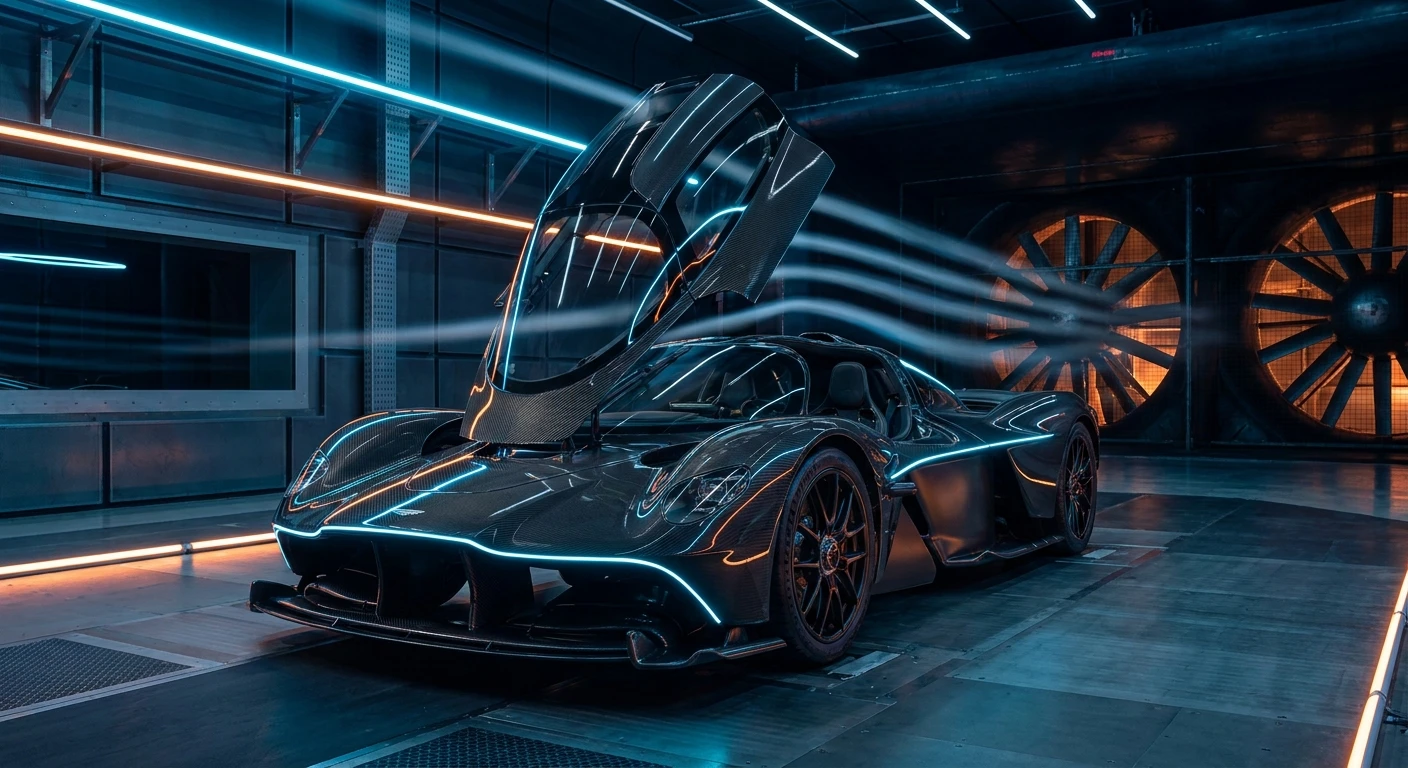
Analyzing the KTM X Bow GT XR Price and Unmatched Performance
If you are trying to pin down the exact KTM X Bow GT XR price before making a serious automotive investment, you are looking at one of the most extreme street-legal machines ever built. You know that feeling when a vehicle looks like it escaped straight from a Le Mans starting grid? That is exactly what the Austrian manufacturer has delivered. Officially, the base figure started around €284,900 prior to local taxes, import duties, and personalized options, but the actual transaction cost often climbs significantly higher. This is not just another weekend sports car; it is a meticulously engineered, carbon-fiber track weapon designed for the public roads.
To understand the financial commitment, you have to look past the sticker number and appreciate the sheer engineering magnitude beneath the carbon skin. You are effectively purchasing a GT2 race car that has been mildly domesticated. From the fighter-jet style canopy to the mid-mounted turbocharged engine, every single component is developed with uncompromising precision. We are going to break down exactly what makes this machine command such a premium, how the technology justifies the expense, and what ownership actually entails for the dedicated enthusiast.
Read also: Who is marat ganiev? The Complete Creative Guide; How to Build a black and gold brand; Sharon Granites: The Ultimate Guide for Your Home.
The Core Value: Why the Cost is Justified
When you start evaluating high-end hypercars, the value proposition often gets murky. However, the reasoning behind this specific vehicle’s cost is deeply rooted in its uncompromising hardware. The core philosophy here is extreme weight reduction paired with immense mechanical grip and aerodynamic efficiency. You are paying for specialized manufacturing techniques usually reserved for top-tier motorsports.
Take the carbon-fiber monocoque, for instance. It weighs a mere 89 kilograms. That is an astonishing engineering feat that provides immense torsional rigidity while keeping the overall vehicle weight incredibly low. Another prime example of the value is the electric jet-fighter canopy. Instead of traditional doors, the entire roof section lifts forward, offering a theatrical entry and exit experience while saving weight and maintaining structural integrity. These are not off-the-shelf parts; they are bespoke solutions that demand immense research and development budgets.
| Component / Feature | Specification Details | Impact on Overall Cost |
|---|---|---|
| Carbon Fiber Monocoque | 89 kg aerospace-grade tub | High – Primary driver of the base cost |
| Audi 2.5L TFSI Engine | 500 hp, 581 Nm torque | Medium – Reliable but requires bespoke integration |
| Electric Fighter Canopy | Soft-close, integrated glass | High – Complex engineering and safety testing |
So, what actually drives the final figure up once you sit down to configure your allocation? There are several major factors that push the out-the-door number well beyond the base estimate:
- Bespoke Personalization: Custom paint liveries, interior Alcantara stitching, and exposed carbon finishes can easily add tens of thousands to the final bill.
- Performance Upgrades: Optional center-lock wheels, aggressive track-focused tire compounds, and carbon-ceramic braking systems drastically shift the financial requirements.
- Logistics and Taxation: Depending on your geographic location, import duties, luxury car taxes, and specialized transport logistics represent a massive chunk of the total acquisition expense.
Origins of the X-Bow Lineage
To truly appreciate the modern iteration, you have to look back at the original concept from 2008. The Austrian motorcycle giant wanted to create a four-wheeled machine that captured the raw, unfiltered essence of their superbikes. Partnering with the legendary chassis builders at Dallara, they created an open-cockpit, windshield-free track toy. It was radical, lightweight, and completely devoid of creature comforts. That original machine set the foundational philosophy: low weight, central mass distribution, and absolute mechanical purity. It was an instant hit among track-day purists who wanted formula-car handling in a reliable, production-based package.
Evolution to the GTX and GT2 Racing
As the years progressed, the manufacturer realized the chassis had far more potential than just an open-air go-kart. They began developing closed-cockpit variants specifically for professional endurance racing. This led to the creation of the GTX and the GT2 race cars. These vehicles featured aggressive aerodynamic packages, significantly more power, and a fully enclosed carbon-fiber safety cell. Competing globally, these track-only monsters proved that the fundamental architecture could handle 500+ horsepower while delivering extreme reliability. The racing program essentially served as a brutal, multi-year testing phase for the street car.
The Modern State of the GT-XR
Fast forward to the present, and the GT-XR represents the ultimate culmination of that racing lineage, finally brought to the public roads. Manufactured in an exclusive, low-volume facility in Graz, Austria, production is tightly capped. Only roughly 100 units are built annually, ensuring massive exclusivity. The modern state of this vehicle is a perfect blend of brutal track capability and just enough compliance to navigate a mountain pass on a Sunday morning. It retains the aggressive aero and the carbon tub from the GT2 car, but adds air conditioning, a rearview camera, and enough suspension compliance to survive public asphalt.
Scientific and Technical Deep Dive
Carbon Fiber Torsional Rigidity
The secret to the car’s handling lies in the science of its central tub. Traditional metal chassis flex under heavy cornering loads, which alters the suspension geometry dynamically. To combat this, the engineers utilize pre-preg carbon fiber cured in highly pressurized autoclaves. This process aligns the carbon polymers to offer maximum tensile strength. The resulting tub boasts an exceptionally high torsional rigidity—meaning it resists twisting forces when subjected to lateral G-loads. Because the chassis does not flex, the suspension dampers and springs can do their jobs with absolute precision, translating into razor-sharp steering feedback and predictable behavior at the absolute limit of adhesion.
Thermodynamics and Aerodynamic Efficiency
Managing the airflow around a vehicle capable of reaching 280 km/h is a complex exercise in fluid dynamics. The exterior design is not just for visual drama; it acts as a massive aerodynamic tool. Utilizing the Bernoulli principle, the underbody features a completely flat floor that transitions into a massive rear diffuser. This accelerates the air passing under the car, creating a low-pressure zone that literally sucks the vehicle into the tarmac without adding weight. Furthermore, cooling a high-output, mid-mounted engine requires precise thermal management.
- AirCurtain System: Routes high-pressure air around the front wheels to reduce turbulent drag and improve overall aerodynamic efficiency.
- Vortex Generators: Small fins placed strategically to trip the boundary layer of air, keeping the airflow attached to the rear wing for maximum downforce.
- Thermal Extraction: Top-mounted engine vents specifically designed to pull ambient heat out of the engine bay when the vehicle is stationary, preventing heat soak.
- Weight Distribution: Achieves a near-perfect rear-biased weight distribution, allowing the rear tires to effectively put down 500 horsepower without excessive wheelspin.
The Ownership Journey: 7 Steps to Procurement and Operation
Step 1: Securing an Allocation
Because production is strictly limited to around 100 units per year globally, you cannot simply walk into a showroom and drive off with one. The first step involves contacting a specialized dealership to secure a build slot. This typically requires a substantial initial deposit and a waiting period that can stretch from several months to over a year, depending on global demand.
Step 2: Configuring Your Specification
Once your slot is confirmed, the fun part begins. You will work directly with factory representatives to spec the vehicle. This includes choosing the exterior carbon finishes, selecting the interior Alcantara colors, and deciding on functional options like the carbon-ceramic brake package or specific wheel designs tailored for either street or track use.
Step 3: Navigating Homologation
Importing a low-volume hypercar requires careful legal navigation. Depending on your country, the vehicle must pass specific emissions and safety homologation standards. It is crucial to work with an importer who understands the localized requirements to ensure the vehicle can legally wear license plates in your jurisdiction.
Step 4: Logistics and Delivery
Shipping a carbon-fiber hypercar requires enclosed, climate-controlled transport. Whether it is arriving via air freight or specialized sea containers, ensuring the logistics company is insured for high-value exotics is paramount. The handover process usually involves a detailed technical briefing on how to operate the canopy, suspension systems, and telemetry.
Step 5: Suspension Setup and Alignment
Straight from the factory, the car is set up with a baseline geometry. However, serious owners will immediately take the vehicle to a race shop to dial in the camber, caster, and toe settings for their specific local roads or their favorite racing circuit. Proper alignment is critical to maximizing the tire contact patch.
Step 6: Maintenance and Consumables
Owning a track-focused machine means you are on an aggressive maintenance schedule. Fluid changes happen frequently, and checking the torque specs on suspension components is a regular task. You will go through high-performance tire compounds and specialized brake pads rapidly if you use the car as intended.
Step 7: Long-Term Storage Protocols
When the driving season ends, preserving the machine is vital. This involves hooking up a trickle charger to maintain the lightweight lithium-ion battery, over-inflating the tires to prevent flat spots, and keeping the vehicle in a climate-controlled environment to protect the exposed carbon fiber clear coats from fluctuating humidity.
Myths & Reality
Myth: It is just a modified Audi TT because they share the same engine.
Reality: While it does utilize the legendary Audi 2.5L inline-5 engine, that is where the similarities end. The entire chassis, suspension architecture, aerodynamics, and carbon-fiber tub are 100% bespoke to the Austrian manufacturer.
Myth: It is completely unusable on regular public roads.
Reality: Unlike its racing siblings, this version includes an optional hydraulic lift system for speed bumps, air conditioning, electric power steering, and a digital rearview mirror, making weekend road trips surprisingly manageable.
Myth: The base price is exactly what you will end up paying.
Reality: Factory options, personalized carbon treatments, destination charges, and local luxury taxes routinely inflate the final acquisition cost by 20% to 30% above the advertised base figure.
Myth: You need a professional racing license to drive one.
Reality: It is fully street-legal for anyone with a standard driver’s license. However, given the immense power-to-weight ratio, attending a high-performance driving school is highly recommended to handle it safely.
Frequently Asked Questions
What is the exact starting KTM X Bow GT XR price?
The base figure launched at approximately €284,900, but final costs vary wildly based on customization, options, and regional taxes.
How much horsepower does the engine produce?
The turbocharged 2.5-liter five-cylinder engine produces a staggering 500 horsepower, all routed exclusively to the rear wheels.
What kind of transmission does the car use?
It utilizes a 7-speed dual-clutch transmission (DSG), providing lightning-fast, seamless paddle shifts optimized for both track and street environments.
How much does the vehicle weigh?
Thanks to the extensive use of carbon fiber, the dry weight sits at an incredibly light 1,130 kilograms (roughly 2,491 lbs).
Does it have a traditional trunk for luggage?
Surprisingly, yes. There is a small 160-liter storage compartment designed to fit bespoke luggage bags for short weekend getaways.
Is the jet-fighter canopy manually operated?
No, the massive glass and carbon canopy is electrically operated, providing a smooth, theatrical opening mechanism for entry and exit.
What is the top speed?
Aerodynamically limited by its immense downforce components, it achieves a top speed of approximately 280 km/h (174 mph).
If you are serious about stepping into the hypercar realm, the KTM X Bow GT XR price represents access to an unparalleled driving experience. It blurs the line between a dedicated track monster and a Sunday canyon carver. Ready to experience absolute mechanical purity? Contact your nearest specialized exotic dealer to start the configuration process today!